Women's longevity supplement needs shift considerably across life stages. Key nutritional considerations include iron and folate during the reproductive years, calcium, vitamin D, and magnesium as the perimenopause approaches, omega-3 for cardiovascular support post-menopause, and vitamin B12 with adequate protein in later decades. No single supplement serves all life stages equally well.
Key Takeaways
- Iron is among the most relevant nutrients for premenopausal women; low ferritin is common even without clinical anaemia, and has been associated with fatigue and reduced physical performance in human studies.1,2
- Bone mineral density loss accelerates around menopause; combined calcium and vitamin D supplementation has been shown to support bone mineral density in postmenopausal women across multiple randomised controlled trials.4
- Omega-3 fatty acids (EPA and DHA) have been extensively studied for cardiovascular support; a 2021 meta-analysis of 38 randomised controlled trials found omega-3 supplementation was associated with improved cardiovascular outcomes.5
- Vitamin B12 absorption from food sources decreases with age due to reduced stomach acid production; older women in particular may benefit from supplemental or crystalline forms of B12 to maintain adequate status.7
- Biotin, zinc, and selenium contribute to the maintenance of normal skin and hair (EFSA-approved claims); hydrolyzed collagen has also been studied for skin hydration and elasticity in adult women, though evidence quality varies.8
- Magnesium contributes to normal energy-yielding metabolism, muscle function, and reduction of tiredness and fatigue (EFSA-approved claims), and is particularly relevant as intake often falls below recommended levels in women over 40.
- Supplement needs are highly individual; healthcare provider consultation is essential, especially for women on medication or with existing health conditions.
Why Women's Supplement Needs Are Not One-Size-Fits-All
The biology of female ageing involves hormonal transitions, shifting nutritional demands, and varying patterns of nutrient absorption that differ meaningfully across decades. A woman in her mid-twenties navigating menstrual iron losses has different nutritional priorities from a woman in her early fifties approaching menopause, or from a woman in her seventies for whom B12 absorption has declined. Recognising these distinctions is the foundation of an evidence-informed approach to women's longevity supplementation.
This article takes a life-stage perspective, summarising what human research suggests about the most relevant nutrients at different phases of a woman's life. It applies EFSA-approved health claims where relevant, references human clinical evidence, and maintains a balanced view that neither overstates the power of supplementation nor dismisses it. The goal is to inform, not to prescribe.
Women's Nutritional Needs by Life Stage
The Reproductive Years (20s to Late 30s): Iron, Folate, and Calcium Foundation
During the reproductive years, monthly menstrual losses create a persistent demand for iron that many women do not fully meet through diet. Iron plays a structural role in haemoglobin, the protein responsible for oxygen transport in red blood cells. Beyond frank anaemia, research has identified a pattern of iron deficiency without anaemia -- sometimes called non-anaemic iron deficiency -- as a common and underdiagnosed condition in premenopausal women, and one that has been associated with fatigue and impaired physical and cognitive performance.2
A multicentre, randomised, double-blind, placebo-controlled trial enrolled 198 non-anaemic women aged 18 to 53 years who presented with fatigue and low serum ferritin (below 50 mcg/L). Participants received oral ferrous sulfate (80 mg elemental iron daily) or placebo for 12 weeks. The iron group showed a significantly greater reduction in fatigue scores compared to the placebo group. The study also observed improvements in quality of life ratings in the iron-supplemented group.1 These findings are consistent with a broader body of human research suggesting that iron sufficiency is relevant to energy and performance even in the absence of frank anaemia.2
Folate is another central nutrient during the reproductive years. Folate contributes to normal amino acid synthesis and to the process of cell division (EFSA-approved claims), and adequate folate status during early pregnancy is recognised as important across international guidelines. Women of childbearing age are generally advised to maintain good folate status through diet, fortified foods, or supplementation, particularly if pregnancy is planned or possible.
Calcium intake during the twenties and thirties contributes to the bone mineral density peak that the body reaches in early adulthood. This foundation matters because the rate of bone loss that occurs at menopause draws down from whatever density was established earlier. Calcium contributes to the maintenance of normal bones (EFSA-approved claim), and building adequate stores during younger years is a relevant long-term consideration.
Perimenopause and the 40s: Vitamin D, Magnesium, and B Vitamins for Energy and Bone
The perimenopausal period -- typically spanning the forties and into the early fifties -- is characterised by hormonal fluctuations that can affect energy, mood, sleep, and bone metabolism. Several nutrients become increasingly relevant during this transition.
Vitamin D contributes to the maintenance of normal bones, normal muscle function, and the normal function of the immune system (EFSA-approved claims). Serum vitamin D insufficiency is prevalent across adult women in many populations, particularly in northern climates and among those with limited sun exposure. During perimenopause, when bone remodelling begins to shift, maintaining adequate vitamin D status is a well-supported nutritional consideration.
Magnesium contributes to normal energy-yielding metabolism, to the reduction of tiredness and fatigue, to normal muscle function, and to normal protein synthesis (EFSA-approved claims). Surveys suggest that magnesium intake frequently falls below reference values in adult women, and this gap may widen with age as dietary diversity narrows. In a randomised controlled trial examining magnesium supplementation in women, researchers observed significant improvements in energy and fatigue components of quality of life measures compared to placebo.6 While the study population was specific, the mechanisms involved -- magnesium's role in ATP synthesis and neuromuscular function -- are generalisable to the broader context of energy metabolism.
B vitamins, including vitamins B1, B3, B6, B12, and folate, contribute to normal energy-yielding metabolism and to the reduction of tiredness and fatigue (EFSA-approved claims). Vitamin B6 and B12, along with folate, contribute to normal homocysteine metabolism, a pathway of relevance as women age. Ensuring adequate B vitamin status during the perimenopausal period supports normal psychological function and nervous system function (EFSA-approved claims).
Post-Menopause (50s and Beyond): Bone, Heart, and Metabolic Support
The years following menopause are characterised by accelerated bone mineral density loss, a shifting cardiovascular risk profile, and increasing metabolic changes. Key nutritional priorities at this stage include calcium and vitamin D for bone, omega-3 for cardiovascular support, and continued magnesium for energy and bone maintenance.
Calcium and vitamin D together are the most studied nutritional intervention for bone health in postmenopausal women. A systematic review and meta-analysis pooling data from 11 randomised controlled trials, including 43,869 participants, found that combined calcium and vitamin D supplementation was associated with increased bone mineral density, particularly at the pelvis, and with modest reductions in hip fracture incidence in some subgroup analyses.4 Results were heterogeneous across studies and populations, and the authors noted that the evidence for fracture reduction was not uniformly consistent. Nevertheless, vitamin D and calcium supplementation remains a widely recommended component of bone health protocols for postmenopausal women.
Vitamin K contributes to the maintenance of normal bones (EFSA-approved claim), and its co-administration with vitamin D and calcium has been the subject of growing research interest. Magnesium and zinc also contribute to normal bone maintenance (EFSA-approved claims), making these collectively relevant nutrients in the post-menopausal years.
Cardiovascular health becomes an increasingly important priority after menopause, as the loss of oestrogen is associated with changes in lipid profiles and arterial function. Omega-3 fatty acids (EPA and DHA) have been studied extensively in this context. A meta-analysis of 38 randomised controlled trials (149,051 participants) published in 2021 examined the effect of omega-3 supplementation on cardiovascular outcomes, finding that omega-3 fatty acids were associated with reduced cardiovascular mortality and improved cardiovascular outcomes; EPA monotherapy showed stronger effects than EPA combined with DHA across the included trials.5 Thiamine (vitamin B1) contributes to normal heart function (EFSA-approved claim) and is relevant to include in a well-formulated multi-nutrient supplement.
Older Women (65 and Beyond): B12, Protein, and Immune Support
From the mid-sixties onward, physiological changes create specific nutritional vulnerabilities. The most clinically recognised of these is the decline in the absorption of food-bound vitamin B12, which occurs as a consequence of reduced stomach acid secretion and atrophic gastritis -- conditions that become more prevalent with advancing age.
Unlike dietary vitamin B12, which requires gastric acid and intrinsic factor for absorption from food, supplemental or crystalline vitamin B12 can be absorbed through passive diffusion and is therefore not dependent on these mechanisms. Clinical guidance recognises this distinction and recommends that older adults obtain their B12 from supplements or fortified foods rather than relying solely on dietary sources.7 Vitamin B12 contributes to normal energy-yielding metabolism, normal cognitive function, and reduction of tiredness and fatigue (EFSA-approved claims). B12, B6, and folate together contribute to normal homocysteine metabolism (EFSA-approved claim), a metabolic pathway relevant to cardiovascular and neurological health.
Immune support becomes increasingly important with age. Vitamins C, D, B6, B12, folate, zinc, and selenium all contribute to the normal function of the immune system (EFSA-approved claims). Ensuring adequate status across these nutrients is a practical foundation for supporting immune resilience in older women.
Bone Health: A Female-Specific Priority
Bone health is one of the most evidence-supported areas of women's longevity nutrition, and for good reason. Women lose bone mass at a faster rate than men, particularly in the years immediately following menopause. The rapid hormonal shift associated with the end of the menstrual cycle accelerates the natural rate of bone remodelling, such that bone breakdown outpaces bone formation. This cumulative loss increases the likelihood of fractures in later life, with hip fractures in particular carrying significant consequences for independence and quality of life.
The nutrients with EFSA-approved claims for bone maintenance include: vitamin D, vitamin K, calcium, magnesium, and zinc. Vitamin C contributes to normal collagen formation for bones and cartilage (EFSA-approved claim). These work as an interconnected system rather than in isolation. Vitamin D facilitates calcium absorption in the gut; vitamin K directs calcium toward bone mineralisation rather than soft tissues; magnesium influences vitamin D activation and participates in bone crystal formation.
Human clinical data supports the role of combined calcium and vitamin D supplementation in modifying bone mineral density in postmenopausal women. As noted above, a large systematic review of 11 RCTs found positive effects on pelvic bone mineral density and a nominal reduction in hip fracture incidence, though effects on other skeletal sites were less consistent.4 The study underscores that supplementation alone -- without sufficient dietary protein, physical activity, and overall nutrient adequacy -- represents only one part of a bone health strategy.
Practical note: bone density testing (DEXA scanning) is an important clinical tool for postmenopausal women to establish a baseline and monitor change. Supplementation decisions are best made in consultation with a healthcare provider who can review individual bone density status, dietary calcium intake, and vitamin D serum levels.
Hormonal Transitions and Nutritional Support
The perimenopausal and menopausal transition is a physiological process that unfolds over several years, typically beginning in the mid-to-late forties. Hormonal fluctuations during this time can influence sleep, mood, energy, and concentration -- all of which have nutritional dimensions worth understanding.
Magnesium, B vitamins, and vitamin C all contribute to normal psychological function (EFSA-approved claims). While no supplement can replicate the hormonal complexity of this transition, supporting the body's general nutritional foundations is a reasonable approach during this period.
Phytoestrogens -- plant compounds found in soy, red clover, and flaxseed that interact with oestrogen receptors -- have received research attention for menopausal support. Human evidence is mixed and highly variable, with some studies reporting modest effects on certain symptoms and others finding no significant benefit. Phytoestrogens are not EFSA-approved for specific health claims in this context, and any use should be discussed with a healthcare provider, particularly for women with a history of hormone-sensitive conditions.
Chromium contributes to normal macronutrient metabolism and the maintenance of normal blood glucose levels (EFSA-approved claim). Post-menopausal changes in insulin sensitivity make metabolic support nutrients relevant to include in a well-rounded approach.
It is important to frame all of this accurately: nutritional support during hormonal transitions is adjunctive, not therapeutic. Women experiencing significant perimenopausal or menopausal symptoms should consult a qualified healthcare professional to explore appropriate management options, which may include dietary strategies, lifestyle approaches, or medical support depending on individual circumstances.
Skin, Hair, and Collagen After 40
The visible signs of ageing in skin and hair have clear nutritional dimensions. Collagen production decreases progressively from the late twenties, with an accelerated decline after menopause linked to the reduction in oestrogen. Skin hydration, elasticity, and hair structure are all influenced by micronutrient status.
Several nutrients have EFSA-approved claims in this area. Zinc and biotin contribute to the maintenance of normal skin and hair. Selenium contributes to the maintenance of normal hair and nails. Biotin and vitamin B3 contribute to normal mucous membranes. Vitamin C contributes to normal collagen formation for the skin. These represent well-established nutritional foundations for skin and hair health.
Hydrolyzed collagen peptide supplementation has been investigated for its potential to support skin hydration and elasticity. A 2021 systematic review and meta-analysis examined the effect of hydrolyzed collagen supplementation on skin ageing across multiple randomised controlled trials, finding associations with improved markers of skin hydration, elasticity, and wrinkle appearance in most included studies.8 However, a more recent 2025 meta-analysis of 23 RCTs (1,474 participants) found that when studies were stratified by funding source and study quality, the positive effects were most pronounced in industry-funded and lower-quality studies; high-quality, non-industry-funded studies showed no significant effect.* This heterogeneity means collagen supplementation for skin should be approached with realistic expectations and considered within a broader skin nutrition strategy rather than as a standalone solution.
Vitamin C is a necessary cofactor for collagen synthesis, supporting normal collagen formation for the skin (EFSA-approved claim). Ensuring adequate vitamin C status through diet or supplementation is a foundational step in supporting the body's own collagen production pathways. Zinc contributes to protection of cells from oxidative stress and to normal DNA synthesis (EFSA-approved claims), further supporting skin integrity.
Evaluating Supplement Quality: What to Look For
The quality of the supplement products women choose at each life stage matters considerably. Several criteria help distinguish well-produced supplements from those with less transparency.
Third-party testing by an accredited independent laboratory confirms that a product contains the ingredients it claims, at the declared amounts, and is free from contaminants including heavy metals, microbial contamination, and residual solvents. A Certificate of Analysis (COA) from an accredited laboratory should ideally be available to consumers. For women in sport or professional contexts, doping-free certification (such as NZVT certification) provides additional assurance.
Label transparency is equally important. Products should clearly identify the form of each ingredient (e.g., magnesium glycinate vs. magnesium oxide) and the amount per serving, without proprietary blends that obscure individual ingredient doses.
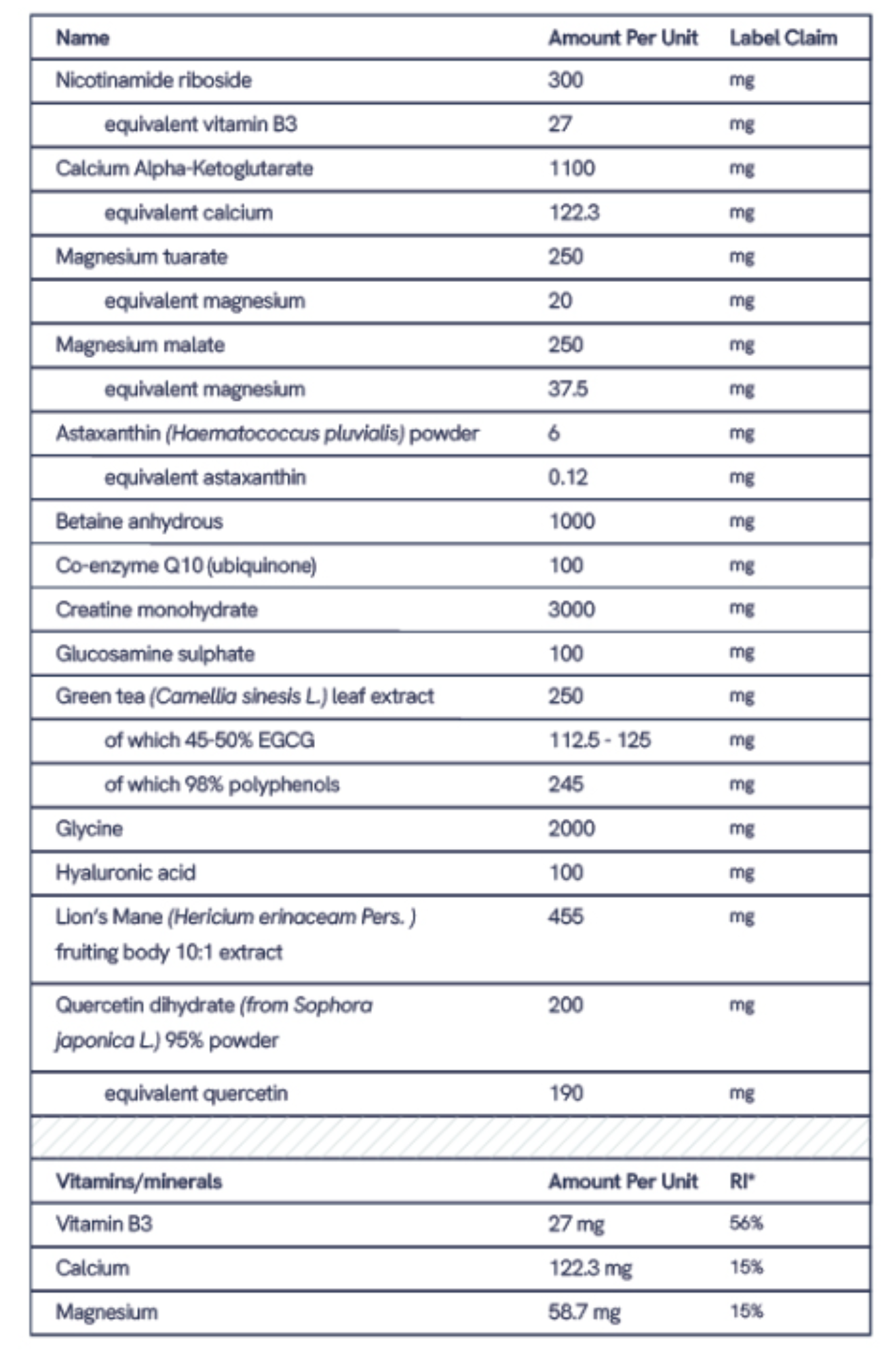
For women who prefer a comprehensive approach, multi-nutrient formulations can help address several life-stage-specific gaps simultaneously. Longevity Complete is formulated around ingredients with strong regulatory and scientific foundations. For example, it includes magnesium (which contributes to normal energy-yielding metabolism and reduction of tiredness and fatigue), zinc (which contributes to normal cognitive function and maintenance of normal skin and hair), vitamin D (which contributes to maintenance of normal bones and normal immune function), and B vitamins including B6, B12, and folate (which contribute to normal homocysteine metabolism and energy-yielding metabolism) -- all EFSA-approved claims relevant to women's longevity nutrition. Products tested by Eurofins and holding third-party COA documentation provide a higher level of confidence in what is delivered with each serving.
Q&A: Longevity Supplements for Women
Do women need different supplements than men?
Women and men share many of the same fundamental nutritional needs, but physiological differences -- including menstrual iron losses, hormonal transitions, and higher rates of osteoporosis -- create distinct priorities at different life stages. Iron and folate during the reproductive years and specific bone health nutrients approaching menopause are among the areas where women's needs diverge most significantly from men's. Supplement strategies should reflect these distinctions rather than defaulting to a generic multivitamin.2
Is iron supplementation safe for women over 50?
Iron needs change substantially after menopause. Once menstruation ceases, monthly iron losses stop, and iron requirements decrease to levels that most women can meet through a balanced diet. Routine iron supplementation in postmenopausal women without confirmed deficiency is generally not recommended and should be guided by blood tests and a healthcare provider's assessment. Iron overload is a genuine risk if supplementation continues beyond actual need.
What is the most important supplement for women over 50?
There is no single most important supplement, as needs are multifactorial. However, the combination of vitamin D and calcium for bone mineral density support, omega-3 for cardiovascular health, and magnesium for energy and muscle function are among the most evidence-supported nutritional priorities for this age group.4,5 Vitamin B12 should also be considered, particularly as absorption from food may become less efficient with advancing age.7
Can supplements help with perimenopausal symptoms?
Some nutrients -- including magnesium, B vitamins, and vitamin C -- contribute to normal psychological function and the reduction of tiredness and fatigue (EFSA-approved claims), which are relevant during the perimenopausal period. However, supplements are not a substitute for professional guidance on managing perimenopausal symptoms. Women experiencing significant symptoms should consult a qualified healthcare professional to explore appropriate options for their individual circumstances.
How much vitamin D do women need?
Vitamin D requirements vary by individual, geographic location, skin pigmentation, and sun exposure. Serum 25-hydroxyvitamin D testing is the most reliable way to assess status. While general reference intakes exist, optimal serum levels and appropriate supplementation doses are best determined in consultation with a healthcare provider based on individual testing. Vitamin D contributes to maintenance of normal bones, normal muscle function, and normal immune function (EFSA-approved claims).
Are collagen supplements worth taking for women's skin health?
The evidence base for collagen supplementation in skin health is evolving and somewhat mixed. Earlier meta-analyses suggested improvements in hydration and elasticity from hydrolyzed collagen; however, a more recent meta-analysis found that effects were primarily seen in lower-quality or industry-funded studies.8 Ensuring adequate intake of vitamin C (for collagen synthesis), zinc, selenium, and biotin represents a more firmly evidenced nutritional foundation for skin health. Collagen supplementation may be a reasonable addition for some women, but should not be prioritised over these micronutrient foundations.
Do older women absorb vitamins differently?
Yes. Vitamin B12 absorption from food-based sources declines with age due to reduced gastric acid secretion, a condition associated with atrophic gastritis that becomes more common from the mid-fifties onward. Crystalline or supplemental vitamin B12 does not rely on this pathway and is better absorbed by older adults.7 Calcium absorption also changes with age and is influenced by vitamin D status. These shifts in absorption physiology reinforce the case for age-specific nutritional strategies rather than a one-size-fits-all approach.
What supplements support women's immune health?
Vitamins C, D, B6, B12, folate, zinc, and selenium all contribute to the normal function of the immune system (EFSA-approved claims). Maintaining adequate status across these nutrients is a well-established nutritional foundation for immune resilience. This is particularly relevant for women in their fifties and beyond, when immune function naturally becomes more variable.
FAQ
What are the best longevity supplements for women?
There is no universal "best" supplement for all women, as needs vary by life stage and individual status. However, across adult life stages, consistently relevant nutrients include vitamin D, magnesium, B vitamins (especially B12 with age), omega-3 fatty acids, calcium, zinc, and selenium. Iron is particularly relevant for premenopausal women.2 A comprehensive multi-nutrient product with third-party testing and clear labelling is a practical foundation that can be personalised with individual additions based on blood testing and healthcare provider guidance.
Which longevity supplement brands are best for women?
Quality markers to prioritise include: third-party testing (with a Certificate of Analysis from an accredited laboratory), full ingredient transparency, no proprietary blends that obscure doses, and certifications such as doping-free status for women in sport. The Longevity Store's Longevity Complete is formulated around EFSA-approved ingredients with published third-party testing through Eurofins and NZVT doping-free certification. Evaluating any supplement brand against these quality criteria is a more reliable approach than relying on marketing claims alone.
Are longevity superfood blends suitable for women?
Superfood blends can contribute micronutrients, phytonutrients, and antioxidants that complement a balanced diet. The most relevant evaluation criteria are the same as for any supplement: ingredient transparency, verified dosages, and third-party testing. Women should look for blends that include nutrients with clear nutritional relevance to their life stage -- such as magnesium, B vitamins, zinc, and vitamin D -- rather than focusing primarily on exotic or trending ingredients with limited human clinical evidence.
What supplements are most important for women over 50?
Post-menopausal women benefit from prioritising: calcium and vitamin D (bone health, EFSA-approved claims), omega-3 fatty acids (cardiovascular health), magnesium (energy, muscle function, EFSA-approved claims), vitamin B12 (energy and neurological support, increasingly relevant as absorption from food declines with age), and zinc and selenium (immune function and skin health).4,7 Individual requirements vary, and blood testing is the most reliable guide to where genuine gaps exist.
How do longevity shots compare to supplements for women?
Liquid formats and "longevity shots" can provide certain nutrients in a convenient form, but the same quality evaluation criteria apply as for any supplement product: What ingredients are included? At what doses? Has the product been independently tested? Are the ingredients supported by human clinical evidence? The format (liquid vs. capsule vs. powder) is secondary to ingredient quality, dosage accuracy, and third-party verification. Women should evaluate longevity shots by the same rigorous criteria as any other supplement category.
When should women start thinking about longevity supplements?
Nutritional foundations for healthy ageing are most effectively built progressively over decades rather than initiated at a single point. Women in their twenties and thirties benefit from attending to iron and folate status, building bone mineral density through calcium and vitamin D, and establishing good dietary habits. Women in their forties should review B vitamin status, vitamin D, and magnesium. Post-menopausal women can expand their focus to include omega-3, B12, and continued bone health nutrients. At every stage, the starting point is a varied, nutrient-rich diet, with targeted supplementation filling specific verified gaps.
References
- Vaucher P, Druais PL, Waldvogel S, Favrat B. Effect of iron supplementation on fatigue in nonanemic menstruating women with low ferritin: a randomized controlled trial. CMAJ. 2012;184(11):1247-54. View on PubMed ↗
- McClung JP, Murray-Kolb LE. Iron nutrition and premenopausal women: effects of poor iron status on physical and neuropsychological performance. Annu Rev Nutr. 2013;33:271-88. View on PubMed ↗
- Lephart SM, Sheppard KE. Assessment of the Efficacy of a Low-Dose Iron Supplement in Restoring Iron Levels to Normal Range among Healthy Premenopausal Women with Iron Deficiency without Anemia. Nutrients. 2023;15(11):2541. View on PubMed ↗
- Liu C, Kuang X, Li K, Guo X, Deng Q, Li D. Effects of combined calcium and vitamin D supplementation on osteoporosis in postmenopausal women: a systematic review and meta-analysis of randomized controlled trials. Food Funct. 2020;11(12):10817-10827. View on PubMed ↗
- Bernasconi AA, Wiest MM, Lavie CJ, Milani RV, Laukkanen JA. Effect of Omega-3 Dosage on Cardiovascular Outcomes: An Updated Meta-Analysis and Meta-Regression of Interventional Trials. Mayo Clin Proc. 2021;96(2):304-313. View on PubMed ↗
- Abdi F, Ozgoli G, Rahnemaie FS. et al. The effects of magnesium supplementation on abnormal uterine bleeding, alopecia, quality of life, and acne in women with polycystic ovary syndrome: a randomized clinical trial. J Ovarian Res. 2022;15(1):89. View on PubMed ↗
- Langan RC, Goodbred AJ. Vitamin B12 Deficiency: Recognition and Management. Am Fam Physician. 2017;96(6):384-389. View on PubMed ↗
- de Miranda RB, Weimer P, Rossi RC. Effects of hydrolyzed collagen supplementation on skin aging: a systematic review and meta-analysis. Int J Dermatol. 2021;60(12):1449-1461. View on PubMed ↗