Budget-conscious longevity supplementation means focusing first on nutrients with the strongest evidence and the highest rates of dietary insufficiency in the general population. Vitamin D, magnesium, and omega-3 fatty acids are among the most commonly discussed starting points. A single, comprehensive multi-nutrient formula may also offer better cost-per-ingredient value than purchasing several individual supplements separately.
Key Takeaways
- Vitamin D insufficiency is widely documented across Europe and internationally, with data suggesting that a substantial proportion of adults have suboptimal status.1,2
- Magnesium intake is suboptimal in many populations; surveys indicate that a large proportion of adults consume less than the estimated average requirement from food alone.3
- Omega-3 fatty acids are among the most extensively studied dietary supplements, with major randomised controlled trials such as the VITAL study enrolling over 25,000 participants.4
- Creatine is supported by a robust body of human evidence; a meta-analysis of 22 trials in older adults found that creatine combined with resistance training increased lean tissue mass and both upper and lower body muscular strength compared to training alone.5
- A multi-nutrient formula can consolidate several foundational ingredients into one product, often at a lower total cost than purchasing each ingredient as a separate supplement.
- Lifestyle foundations, including consistent sleep, regular movement, stress management, and social connection, are free and form the most important base for long-term wellbeing. Supplements are intended to complement, not replace, these foundations.
- Value in supplementation is not determined by price alone. Effective doses, bioavailable forms, third-party testing, and formulation transparency are all relevant quality indicators.
How to Think About Value in Supplementation
Questions such as "are longevity support products worth the money?" and "are longevity superfood blends worth the cost?" are increasingly common. They reflect a reasonable consumer instinct: before committing to a monthly supplement spend, people want to understand what evidence actually supports the products they are considering.
The most useful way to approach this question is to separate it into two parts. First, is there credible human evidence that the ingredient or combination plays a meaningful role in the biological processes relevant to healthy ageing? Second, does the specific product deliver that ingredient in an effective dose, in a well-absorbed form, at a price that represents reasonable value when compared with alternatives?
Both questions matter. A product with excellent scientific credentials but poor ingredient quality, under-dosing, or unnecessary markups does not represent good value. Equally, an aggressively priced product that contains negligible amounts of its featured ingredients, or uses forms with low bioavailability, fails on the first criterion regardless of price.
This article works through both questions in a practical way, starting with which categories of nutrients are most commonly associated with dietary gaps, then addressing how to assess formulation value, and finally placing supplements in their proper context alongside free lifestyle strategies.
The Priority Pyramid: What to Consider First on Any Budget
Thinking of supplementation as a tiered pyramid is a helpful framework. Not all nutrients carry equal urgency for all people, and spending limited resources on high-cost specialised ingredients before covering foundational gaps is rarely the most evidence-informed approach.
Tier 1: Foundational Nutrients with Documented Dietary Gaps
These are nutrients where population-level data consistently shows that a meaningful proportion of adults are not meeting requirements through diet and sun exposure alone, and where EFSA-approved claims reflect a well-established understanding of their physiological roles.
Vitamin D is the most frequently cited example. Its synthesis in the skin depends on UVB sun exposure, which is limited by latitude, season, cloud cover, indoor lifestyles, and sunscreen use. A major review published in the New England Journal of Medicine described vitamin D deficiency as widespread across populations, noting that very few foods naturally contain useful amounts of the vitamin.1 A large European study involving more than 55,000 adults and children across multiple countries found that a substantial proportion of Europeans have serum 25-hydroxyvitamin D concentrations below commonly cited sufficiency thresholds.2 Vitamin D contributes to maintenance of normal bones, normal muscle function, and normal immune function (EFSA-approved claims).
Magnesium is another nutrient where dietary intake data is of concern. Analysis of national survey data in the United States found that approximately 48% of the population consumed less than the required amount of magnesium from food in 2005 to 2006, with an even higher figure observed in earlier surveys.3 Magnesium contributes to normal energy-yielding metabolism, helps reduce tiredness and fatigue, contributes to normal muscle function, and contributes to normal protein synthesis (EFSA-approved claims). Given its role in over 300 enzymatic reactions and the frequency of insufficient dietary intake, magnesium is consistently cited by nutrition researchers as a high-priority nutrient for supplementation consideration.
Omega-3 fatty acids are among the most studied nutrients globally. Oily fish consumption, the primary dietary source of long-chain EPA and DHA, is below recommended levels in many Western populations. The VITAL trial, a randomised, placebo-controlled study of over 25,000 men and women, remains one of the largest human trials of omega-3 supplementation and has informed ongoing scientific discussion about optimal intake and population targeting.4 For those with low dietary fish intake, omega-3 supplementation is a widely considered option at this foundational tier.
Tier 2: Valuable Additions Once the Foundation Is Covered
Once foundational gaps are addressed, a B-vitamin complex (including B1, B3, B6, B12, folate, and biotin) represents the next logical consideration for many people. These nutrients collectively contribute to normal energy-yielding metabolism, normal psychological function, normal homocysteine metabolism, and normal immune function (EFSA-approved claims across the B-vitamin family). Dietary data suggests that B12 insufficiency is notably prevalent among older adults and those following plant-based diets due to B12's exclusive presence in animal-derived foods.
Zinc is another nutrient at this tier. It contributes to normal cognitive function, normal immune function, and normal DNA synthesis (EFSA-approved claims). Zinc intakes vary significantly across populations, with plant-forward diets associated with lower zinc bioavailability due to the presence of phytates in wholegrains and legumes.
Selenium also plays a role here. It contributes to the maintenance of normal hair and nails, normal immune function, and the protection of cells from oxidative stress (EFSA-approved claims). Selenium content in plant foods varies considerably depending on the soil in which they are grown, meaning that people in selenium-depleted regions may have lower dietary intakes.
Tier 3: Targeted Optimisation
This tier includes ingredients with strong evidence in specific populations or for specific functional outcomes, but where the necessity varies considerably between individuals. Creatine is one of the most well-evidenced supplements in this category. A systematic review and meta-analysis of 22 randomised controlled trials in older adults found that creatine supplementation during resistance training produced greater increases in lean tissue mass, chest press strength, and leg press strength compared with resistance training and placebo alone.5 Creatine enhances muscle strength in adults over 55 when combined with regular resistance training (EFSA-approved claim at 3 g per day).
Other ingredients at this tier, such as CoQ10 (ubiquinol), specialised carotenoids, and adaptogenic botanical extracts, have bodies of human research behind them, but tend to be more relevant for specific goals, life stages, or existing gaps. They represent a considered addition once foundational priorities are secure rather than a first spend.
Single Supplements vs Multi-Ingredient Formulas: A Value Comparison
A straightforward cost comparison often surprises people. Consider purchasing five or six individual supplements, each from a reputable manufacturer with transparent labelling and third-party testing. The combined monthly cost of individual products for vitamin D, magnesium, a B-complex, omega-3, and zinc from quality suppliers can add up considerably, often more than a well-formulated multi-nutrient product that consolidates all of these and more into a single daily serving.
There are several reasons why a thoughtfully designed comprehensive formula may offer better total value than equivalent single-ingredient purchases. Testing costs are distributed across one product rather than five or six. Manufacturing quality controls apply to a single product batch. And the consumer has only one label, one third-party Certificate of Analysis, and one product to evaluate for ingredient quality, dose, and form.
This does not mean all multi-ingredient products offer superior value. The key questions to ask of any formula are: Does it contain clinically meaningful doses of its featured ingredients, or are amounts too small to be relevant? Are the forms used bioavailable (for example, magnesium glycinate or citrate rather than oxide; methylated folate rather than folic acid for those with MTHFR considerations)? Is the product independently tested by a third-party laboratory? Is a Certificate of Analysis available on request?
A product that features fifteen ingredients but delivers each in minute quantities does not represent good value. The cost per effective ingredient, rather than the cost per capsule or sachet, is the more meaningful comparison.
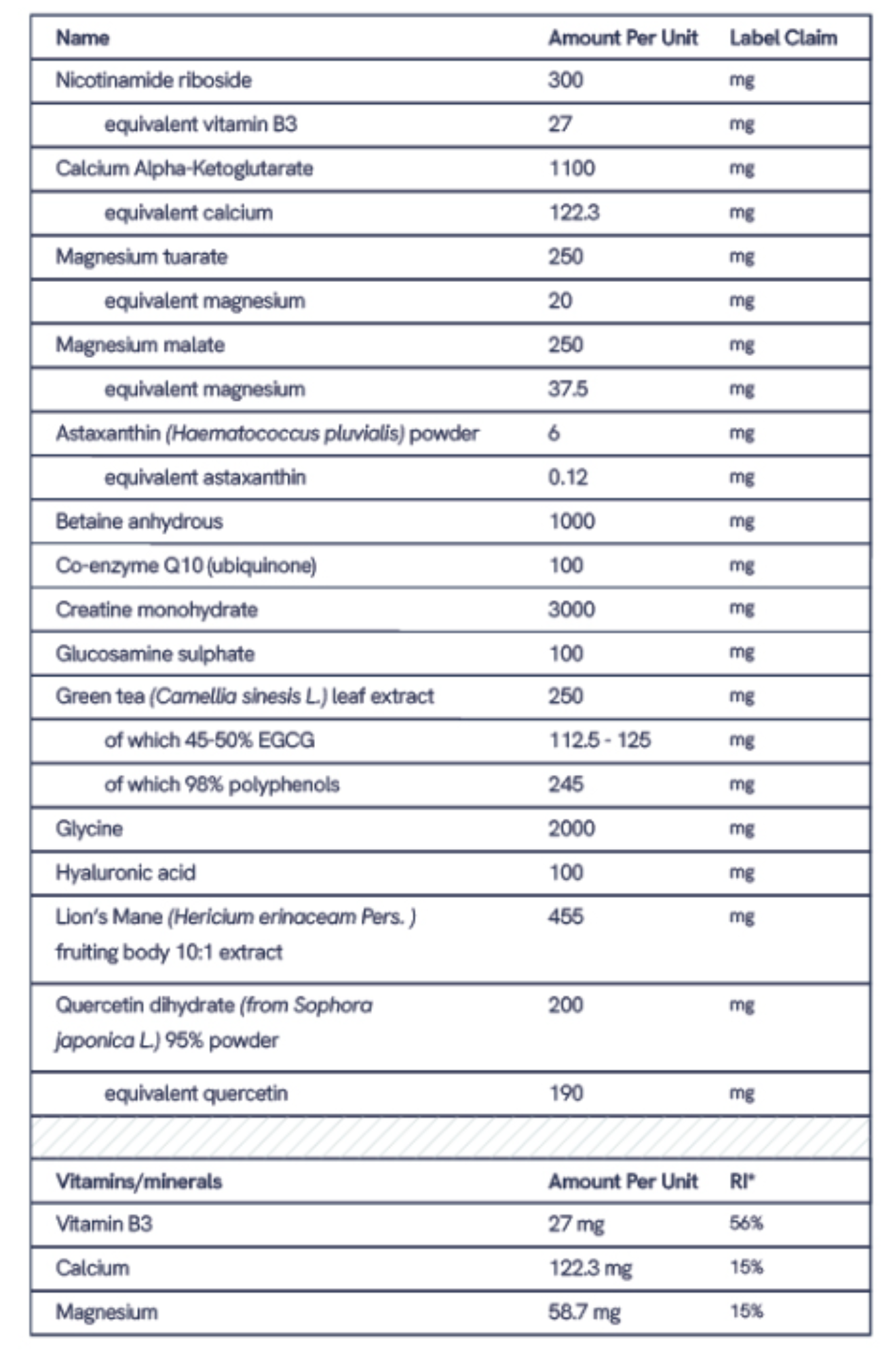
Longevity Complete is an example of a formula built around this principle. It combines EFSA-approved ingredients at meaningful doses, has been independently tested by Eurofins laboratories, and carries NZVT doping-free certification. These are markers of formulation transparency and quality assurance that are relevant to any value comparison.
What "Longevity Shots" and Superfood Blends Are Worth
Longevity shots, liquid concentrates, and superfood blend powders are a growing product category. They are often visually appealing, convenient, and marketed with aspirational language. Whether they are worth the investment depends on two practical questions.
First, what are the actual ingredients and doses? Many liquid products contain lower doses of active ingredients than equivalent capsule formulations due to solubility constraints and palatability considerations. A "longevity shot" with 10 mg of a featured ingredient where published research has used doses ten times higher is not providing meaningful supplemental value at that dose. Reviewing the ingredient list and comparing amounts against the quantities used in cited research is essential.
Second, what is the cost per effective dose compared with alternatives? Liquid and powder formats often carry a premium for convenience and packaging. That premium may be justified for someone who finds capsules difficult to swallow or prefers a drink-format supplement. But if cost is a primary consideration, capsule or tablet formats of equivalent ingredients typically offer better value per milligram.
Superfood blends that combine greens powders, adaptogens, and fruit concentrates offer a different proposition. They can be a convenient way to increase variety of plant compounds in the diet. However, most such products have not been tested in robust human trials at the doses delivered in a standard serving. When evaluating these products against budget, it is worth distinguishing between general dietary variety (which these products may support) and the specific, well-evidenced supplemental contributions of targeted nutrients at validated doses.
The Most Valuable Longevity Strategies Are Free
Before placing a supplement order, it is worth acknowledging a point that is easy to overlook in a consumer context: the most evidence-supported contributors to healthy ageing are not found in a bottle, and they cost nothing.
Regular physical movement, particularly a combination of cardiovascular activity and resistance training, is associated with better preservation of muscle mass, bone density, cardiovascular function, and metabolic health across the lifespan. Consistent, quality sleep supports hormonal regulation, cognitive function, and cellular maintenance processes. Managing chronic psychological stress reduces the physiological burden of sustained cortisol elevation. Social connection and a sense of purpose are consistently associated with wellbeing outcomes in large population studies.
Supplements are intended to complement these lifestyle foundations, not substitute for them. A person who sleeps poorly, is largely sedentary, and eats predominantly processed food will not meaningfully offset those exposures with any supplement protocol, however well-designed.
The most cost-effective longevity investment is therefore a grounded and realistic sequence: build the lifestyle foundations first, address documented dietary gaps with targeted supplementation second, and then consider more specialised ingredients based on individual goals and health context.
Q&A
Are longevity support products worth the money?
Whether a longevity support product is worth its price depends on three factors: the quality of human evidence behind its ingredients, whether doses are meaningful and forms are bioavailable, and whether it has been independently tested. Products meeting these criteria can offer genuine value as complements to a strong lifestyle foundation. Products that rely on exotic ingredient lists with small amounts of each compound, poor-quality testing practices, or unsupported claims are generally less worth spending on, regardless of price.3
Are longevity superfood blends worth the cost?
Superfood blends can be useful for adding dietary variety, but they are not a substitute for targeted nutrients at evidence-based doses. Most blend products have not been evaluated in human trials at the serving sizes delivered, so their specific supplemental contribution is difficult to quantify. If budget is limited, addressing known dietary gaps with validated individual nutrients or comprehensive multi-nutrient formulas typically offers better value per pound or euro spent.
Are longevity shots worth the investment?
Longevity shots can be convenient and may deliver useful amounts of certain active compounds, but premium pricing is common in this category. Before investing, check whether the doses present in a typical serving align with amounts studied in published human trials. Liquid formats may also have lower doses of certain ingredients due to stability and palatability constraints. For budget-minded consumers, comparing the cost per milligram of active ingredient against capsule or tablet alternatives is a practical starting point.
Which nutrient should I prioritise if I can only afford one supplement?
If only one supplement were to be chosen, vitamin D would be the most commonly cited starting point by nutrition researchers, given the combination of widespread insufficiency, the difficulty of obtaining meaningful amounts from diet alone in many regions, the range of physiological functions it supports, and the relatively low cost of a quality vitamin D3 supplement.1,2 Magnesium is a close second for the same reasons. However, individual circumstances, diet, and health context should guide any supplementation decision, and consulting a healthcare professional is advisable.
Does a cheap supplement mean poor quality?
Not necessarily, but price can be a signal of either under-dosing, the use of cheaper ingredient forms with lower bioavailability, or the absence of third-party quality testing. A low-cost vitamin D supplement from a reputable supplier with transparent labelling and adequate testing can be excellent value. The more meaningful questions are: What form of the nutrient is used? What dose is delivered per serving? Is there any independent laboratory testing? These factors determine quality more reliably than price alone.
Is it better to buy a multi-nutrient formula or individual supplements?
For foundational nutrition, a well-designed multi-nutrient formula that consolidates several key ingredients at meaningful doses is often more cost-effective than purchasing each supplement individually, once third-party testing costs, individual product markups, and the inconvenience of managing multiple products are factored in. Where individual needs differ significantly from what a comprehensive formula provides, individual supplements can be used to fill specific gaps.5
Frequently Asked Questions
What are the most important longevity supplements to buy on a budget?
On a limited budget, prioritise nutrients associated with documented dietary insufficiency and EFSA-approved physiological roles: vitamin D, magnesium, and omega-3 fatty acids form a strong foundational tier.1,3 A B-complex and zinc are valuable additions once these are covered. Specialised ingredients such as creatine are best added once a consistent foundation is in place.
How do I know if a supplement is good value?
Evaluate value by looking at the dose per serving and comparing it to doses used in human research, the form of each ingredient (bioavailable forms tend to cost slightly more but deliver better results), evidence of independent third-party laboratory testing, and the availability of a Certificate of Analysis. Price per pill alone is not a reliable quality indicator.
Are expensive longevity supplements always better?
No. Some premium-priced products are justified by superior ingredient sourcing, more bioavailable forms, rigorous third-party testing, and higher doses. Others are priced primarily on branding and packaging. Comparing ingredient lists, doses, and testing credentials directly will reveal whether a higher price reflects meaningful formulation differences.
Can lifestyle choices replace supplements entirely?
Lifestyle foundations, including regular physical activity, quality sleep, a varied whole-food diet, and stress management, form the most important base for healthy ageing and cannot be replaced by supplementation. However, even a well-constructed diet may not reliably provide optimal amounts of vitamin D (which primarily comes from sun exposure), magnesium (depleted from many food crops), or omega-3 fatty acids (requiring regular oily fish consumption). Supplements can address specific gaps that diet and lifestyle do not consistently fill.
What does creatine do and is it worth the cost?
Creatine is one of the most extensively studied sports nutrition supplements. EFSA approves the claim that creatine increases physical performance in successive bouts of short-term, high-intensity exercise at 3 g per day, and that it enhances muscle strength in adults over 55 when combined with regular resistance training. A meta-analysis of 22 randomised controlled trials confirmed that creatine combined with resistance training significantly increased lean tissue mass and muscular strength in older adults.5 Creatine monohydrate is generally available at modest cost and is supported by a strong human evidence base.
What should I look for on a supplement label to assess quality?
Key indicators include: the specific form of each ingredient (for example, magnesium glycinate vs oxide, methylcobalamin vs cyanocobalamin for B12), the dose per serving compared to amounts used in research, the presence of a third-party Certificate of Analysis from a recognised laboratory, any doping-free certification if relevant, and clear disclosure of all excipients. Transparency in these areas is a marker of a quality-focused brand, regardless of price point.
References
- Holick MF. Vitamin D deficiency. N Engl J Med. 2007;357(3):266–281. View on PubMed ↗
- Cashman KD, Dowling KG, Skrabakova Z, Gonzalez-Gross M, Valtuena J, De Henauw S, et al. Vitamin D deficiency in Europe: pandemic? Am J Clin Nutr. 2016;103(4):1033–1044. View on PubMed ↗
- Rosanoff A, Weaver CM, Rude RK. Suboptimal magnesium status in the United States: are the health consequences underestimated? Nutr Rev. 2012;70(3):153–164. View on PubMed ↗
- Manson JE, Cook NR, Lee I-M, Christen W, Bassuk SS, Mora S, et al.; VITAL Research Group. Marine n-3 fatty acids and prevention of cardiovascular disease and cancer. N Engl J Med. 2019;380(1):23–32. View on PubMed ↗
- Chilibeck PD, Kaviani M, Candow DG, Zello GA. Effect of creatine supplementation during resistance training on lean tissue mass and muscular strength in older adults: a meta-analysis. Open Access J Sports Med. 2017;8:213–226. View on PubMed ↗
Disclaimer: Educational content only. Not medical advice. Supplements are not intended to diagnose, treat, cure, or prevent any disease. Consult a qualified healthcare professional if you have a medical condition or take medication.