Menopause marks a pivotal longevity transition for women, not simply a reproductive endpoint. The hormonal shifts — particularly declining oestrogen — accelerate bone density loss, alter cardiovascular risk profiles, and affect cognitive function. Research shows that healthy lifestyle practices adopted during perimenopause and early menopause meaningfully influence longevity outcomes over the following decades.
Key Takeaways
- Cardiovascular disease risk increases notably after menopause as oestrogen levels fall, shifting lipid profiles and altering vascular function; the perimenopause window is considered a critical period for implementing cardiovascular-protective habits.1
- Bone mineral density begins to decline substantially in the late perimenopause, with accelerated loss continuing through the early postmenopause years; this 3–5 year window represents the highest-risk period for skeletal health across a woman's life.2
- Resistance training and weight-bearing exercise are among the most evidence-supported lifestyle interventions for preserving bone mineral density in postmenopausal women, with meta-analyses of randomised controlled trials confirming significant effects at the lumbar spine and femoral neck.3,4
- Subjective cognitive symptoms — commonly described as "brain fog" — are reported by a large proportion of women during the perimenopause; longitudinal studies confirm measurable, though modest, declines in verbal memory and attention during this transition.5
- Adequate intake of calcium and vitamin D is relevant to bone health in postmenopausal women; meta-analyses of randomised trials indicate that combined supplementation is associated with improvements in bone mineral density and, at standard doses, a reduction in hip fracture incidence.6
- Modifiable lifestyle factors — including regular exercise, dietary quality, sleep hygiene, and stress management — interact with the menopause transition and are associated with measurable differences in long-term cardiovascular, skeletal, and cognitive outcomes.1
- The perimenopause and early postmenopause period represents a window in which proactive health practices appear to have outsized long-term impact; clinical evidence suggests that waiting until postmenopause to address key risk factors reduces the opportunity for intervention.
Chapter 1: What Is Menopause? Defining the Transition
Menopause is formally defined as the point in time 12 consecutive months after a woman's final menstrual period, typically occurring between the ages of 45 and 55 in the general population, with a median age of approximately 51 years in many Western cohorts. The period leading up to this point — perimenopause — can span four to eight years, during which menstrual cycle irregularities emerge and hormone levels fluctuate widely. The period following the final menstrual period is referred to as postmenopause.
These three stages are physiologically distinct. During the reproductive years, the ovaries produce oestrogen and progesterone in cyclical patterns governed by follicle-stimulating hormone (FSH) and luteinising hormone (LH) from the pituitary gland. As ovarian reserve declines, oestrogen production becomes irregular and eventually falls substantially. FSH and LH levels rise as the pituitary attempts to stimulate the increasingly unresponsive ovaries — which is why elevated FSH is used clinically as a marker of menopausal status.
The vasomotor symptoms most commonly associated with menopause — hot flushes, night sweats, sleep disruption — reflect the body's adjustment to this hormonal recalibration. However, the long-term health significance of the menopausal transition extends far beyond these short-term discomforts. The withdrawal of oestrogen has physiological consequences across multiple organ systems, including the cardiovascular system, the skeleton, and the brain. Understanding these consequences is the foundation of building a menopause-conscious approach to long-term health.
Chapter 2: Menopause and Cardiovascular Health
Cardiovascular disease is the leading cause of death among women globally, and the risk trajectory changes markedly around the time of menopause. Oestrogen is believed to exert protective effects on the cardiovascular system through multiple pathways: it influences lipid metabolism, promotes vasodilation, and contributes to endothelial function. When oestrogen declines, these effects are diminished.
A 2020 American Heart Association Scientific Statement on menopause and cardiovascular disease risk identified the menopausal transition as a critical period for cardiovascular risk stratification and intervention.1 The statement highlighted that women typically develop coronary heart disease several years later than men, but that this apparent protection diminishes substantially in the postmenopausal years.
Research has documented specific lipid changes associated with menopause. Total cholesterol, LDL cholesterol, and triglyceride levels tend to increase around the time of the final menstrual period, while HDL composition shifts in unfavourable ways. Body fat distribution also changes — the characteristic shift from peripheral (gynoid) to central (android) fat accumulation that occurs after menopause is associated with greater metabolic and cardiovascular risk.2
The timing of menopause itself also carries significance. Cohort research has found that earlier age at natural menopause is associated with greater cardiovascular mortality risk, consistent with the hypothesis that longer cumulative exposure to endogenous oestrogen is protective for the cardiovascular system.
What does this mean practically? Cardiovascular protective habits — maintaining a physically active lifestyle, prioritising dietary quality, not smoking, and monitoring blood pressure and lipids — appear to carry greater weight when initiated during perimenopause and early postmenopause, before the compounding of risk factors over subsequent years. The perimenopause window is a meaningful moment to build or reinforce these habits, rather than waiting for more overt risk to appear.1
Chapter 3: Bone Density After Menopause — The Critical Window
Oestrogen plays a central role in bone remodelling by restraining the activity of osteoclasts — the cells responsible for breaking down bone tissue. When oestrogen levels fall, osteoclast activity increases, and the balance of bone resorption over bone formation tips sharply. The result is a period of accelerated bone loss that is most pronounced in the years surrounding the final menstrual period.
The Study of Women's Health Across the Nation (SWAN) — a multiethnic longitudinal cohort study of 1,902 women — documented that bone mineral density (BMD) at the lumbar spine declined substantially in the late perimenopause and continued at a similar pace in the early postmenopausal years. The greatest loss occurred in a window spanning approximately one year before to two years after the final menstrual period.2 This interval has been described as "transmenopause" — a critical period during which skeletal decisions made or deferred will echo for decades.
The clinical implication is significant: women can lose a substantial proportion of bone mineral density during this relatively short window, before the rate of loss slows in later postmenopause. This makes the perimenopausal and early postmenopausal years the highest-leverage period for skeletal health interventions, not the later decades when osteoporosis is commonly diagnosed.
Exercise as the Primary Bone-Protective Intervention
Human clinical evidence consistently identifies resistance training and high-impact weight-bearing exercise as the most effective lifestyle interventions for preserving bone mineral density in postmenopausal women. The LIFTMOR randomised controlled trial examined the effects of high-intensity resistance and impact training (HiRIT) in postmenopausal women with low bone mass. The researchers reported improvements in lumbar spine BMD of approximately 2–4% compared to low-intensity exercise controls, with high adherence and no serious adverse events.3
A subsequent systematic review and meta-analysis examining multiple exercise intervention studies confirmed that resistance training produces significant improvements in BMD at the lumbar spine and femoral neck in postmenopausal women, with the strongest effects associated with higher training intensities (above 70% of one-repetition maximum) performed at least twice weekly.4 Importantly, the evidence suggests that peak load — the amount of force applied to the bone during each exercise repetition — matters more than the total volume of repetitions when it comes to osteogenic stimulation.
The Role of Calcium and Vitamin D
Nutritional adequacy is the foundation upon which exercise-induced bone adaptations are built. Calcium is the primary mineral component of bone, and vitamin D is required for efficient calcium absorption from the gastrointestinal tract. Both are relevant during the menopause transition, when dietary insufficiency is common.
A meta-analysis of randomised controlled trials involving postmenopausal women found that combined calcium and vitamin D supplementation was associated with significant increases in total bone mineral density, lumbar spine BMD, and femoral neck BMD, as well as a statistically significant reduction in hip fracture incidence.6 It is important to note that the evidence is heterogeneous — not all trials and not all populations show the same magnitude of benefit — and that supplementation is most relevant for women who do not meet dietary requirements through food alone.
Per European Food Safety Authority (EFSA) approved claims: Vitamin D contributes to maintenance of normal bones. Calcium contributes to maintenance of normal bones. Magnesium contributes to maintenance of normal bones. Vitamin K contributes to maintenance of normal bones.
Chapter 4: Cognitive Health Through Menopause and Beyond
A high proportion of women transitioning through menopause report subjective changes in cognitive function — difficulties with memory, concentration, and mental clarity that are often described informally as "brain fog." These reports are consistent enough across populations to have attracted significant research attention.
A 2022 International Menopause Society White Paper reviewed the current evidence base and confirmed that longitudinal studies find small but reliable declines in objective memory performance as women transition into perimenopause, and that these changes are not entirely explained by normal ageing alone.5 The declines observed affect primarily verbal memory, verbal fluency, and attentional processing. Crucially, the authors note that although these changes are measurable, performance levels in most women remain within normal ranges — the cognitive changes of perimenopause are not equivalent to pathological cognitive impairment.
The evidence suggests that several modifiable factors influence cognitive outcomes during and after the menopausal transition. Vasomotor symptoms — particularly hot flushes that disrupt sleep — appear to contribute to subjective cognitive complaints. Sleep quality, mood, and cardiovascular health are all interconnected with cognitive trajectories across the menopausal transition. Aerobic exercise, specifically cardiovascular fitness, has been associated with reduced risk of later-life cognitive decline in female cohorts.
Zinc contributes to normal cognitive function, per EFSA-approved claims. Magnesium, Vitamin B6 and B12 contribute to normal psychological and nervous system function.
Chapter 5: Building a Menopause-Supportive Lifestyle Protocol
The evidence base for menopause and longevity converges on several modifiable lifestyle domains. None of these requires extraordinary resources or effort — but they do require consistent, informed implementation, ideally begun during perimenopause rather than deferred until postmenopause.
Exercise Selection
A well-structured exercise programme for women in the menopausal transition should incorporate two complementary components. Resistance training — performed at meaningful intensity using compound movements that load the spine, hips, and major muscle groups — provides the strongest stimulus for bone density preservation and muscle mass retention. Zone 2 aerobic activity (sustained moderate-intensity cardiovascular exercise) supports cardiovascular health, metabolic function, and cognitive wellbeing. Combining both modalities across the week addresses the key longevity risks introduced by the menopausal transition.
Sleep Environment and Quality
Vasomotor symptoms — hot flushes and night sweats — are among the primary disruptors of sleep quality during perimenopause. The bedroom environment plays a practical role: temperature regulation (sleeping cooler, using breathable bedding), darkness, and noise control each independently contribute to sleep continuity. Sleep disruption has downstream effects on cortisol regulation, appetite, mood, and cognitive performance, making sleep quality a legitimate longevity lever during this transition.
Dietary Priorities
Dietary quality during the menopausal transition has several specific priorities beyond general healthy eating. Adequate protein intake supports muscle mass retention — a key determinant of functional longevity. Calcium-rich foods contribute to bone mineral density maintenance. Oily fish, and for those who do not consume sufficient quantities of oily fish, omega-3 supplementation, is associated with cardiovascular and cognitive benefits relevant to this life stage. Limiting highly processed foods reduces cardiometabolic risk factors that are already rising due to hormonal change.
Stress Management
Chronic psychological stress elevates cortisol, which can contribute to bone resorption and increase visceral fat accumulation — both of which compound the biological changes already occurring during the menopausal transition. Structured stress management practices — whether physical (exercise), social (connection), or contemplative — are a meaningful part of a comprehensive menopause health protocol.
Supplement Bridge: Practical Considerations
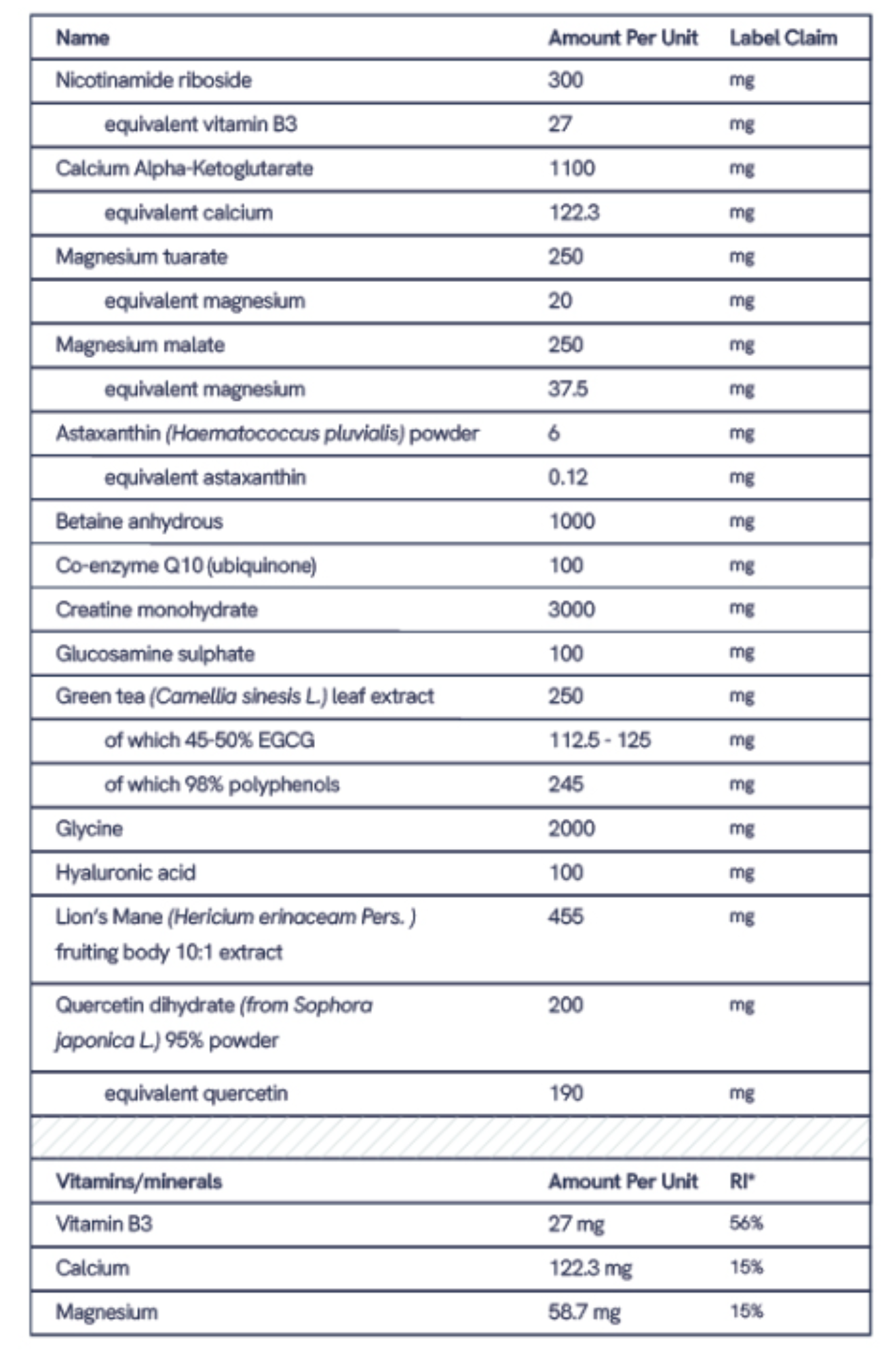
For women who do not consistently meet requirements through diet alone, targeted supplementation may be relevant. Calcium and vitamin D, when combined, are the most evidence-supported nutritional interventions for bone health in postmenopausal women.6 Magnesium contributes to normal muscle function and normal energy-yielding metabolism (EFSA-approved claims). Vitamin K contributes to maintenance of normal bones. These nutrients do not replace exercise or dietary quality — they complement a lifestyle-first approach.
Formulations such as Longevity Complete include several of these nutrients in verified doses. When considering any supplement, it is worth confirming that the product has undergone third-party testing — independent verification of ingredient identity, label accuracy, and absence of contaminants provides an important layer of quality assurance.
Q&A: Menopause and Longevity
What is the difference between perimenopause, menopause, and postmenopause?
Perimenopause is the transitional phase leading up to menopause, typically lasting 4–8 years, during which menstrual cycles become irregular and oestrogen levels fluctuate. Menopause is defined as the point of the final menstrual period, confirmed after 12 consecutive months without menstruation. Postmenopause refers to all years following that point. Each stage has distinct hormonal characteristics and distinct health implications.
Why does cardiovascular risk increase after menopause?
Oestrogen has several favourable effects on the cardiovascular system, including beneficial influences on lipid profiles, blood vessel elasticity, and endothelial function. As oestrogen declines during and after the menopausal transition, these protective effects diminish. Lipid profiles typically shift in an unfavourable direction, and fat distribution moves toward the abdomen, increasing cardiometabolic risk.2 The increased risk is not inevitable, but it does require active lifestyle management.
When does bone loss begin in relation to menopause?
Bone loss begins to accelerate in the late perimenopause — before the final menstrual period occurs. Research from the SWAN cohort documented significant lumbar spine and hip BMD decline beginning in the late perimenopausal stage, continuing through the early postmenopause.2 This means the window for highest-impact skeletal intervention starts before menopause is officially confirmed, not after.
Is "brain fog" during menopause real and how long does it last?
Brain fog during the menopausal transition is a real, measurable phenomenon. Longitudinal research confirms modest but consistent declines in verbal memory and attention during perimenopause that are not fully explained by advancing age.5 For most women, cognitive performance remains within normal limits throughout this transition, and improvements are often observed once the postmenopause is established. Vasomotor symptom severity, sleep quality, and stress levels all influence the experience of brain fog.
What type of exercise is best for bone health after menopause?
High-intensity resistance training targeting the major load-bearing bones — particularly the spine and hips — produces the strongest osteogenic stimulus in postmenopausal women. The LIFTMOR trial demonstrated that high-intensity resistance and impact training produced significant BMD improvements at the lumbar spine compared to low-intensity exercise.3 The key principle is loading: the force applied to the bone during exercise is the primary driver of adaptation. Weight-bearing aerobic activity contributes as a complementary modality.
Does calcium and vitamin D supplementation help with bone density after menopause?
Human evidence from randomised controlled trials supports a beneficial effect of combined calcium and vitamin D supplementation on bone mineral density in postmenopausal women.6 Benefits are most evident for women who do not meet dietary requirements through food alone. Supplementation is best understood as a nutritional foundation that supports, but does not replace, exercise as the primary bone-protective strategy. Vitamin D contributes to maintenance of normal bones; calcium contributes to maintenance of normal bones (EFSA-approved claims).
Can lifestyle choices during perimenopause really affect health decades later?
The research evidence suggests yes. The menopausal transition represents a period of accelerated biological change across multiple systems simultaneously — cardiovascular, skeletal, and metabolic. Lifestyle practices adopted during this window, particularly exercise and dietary quality, appear to attenuate the trajectory of risk accumulation that otherwise occurs. The AHA Scientific Statement on menopause and cardiovascular risk explicitly identifies the perimenopause as a window of early prevention opportunity.1
What role does sleep play in menopause-related health outcomes?
Sleep quality is one of the most frequently disrupted aspects of the menopausal transition, primarily through vasomotor symptoms that cause night-time awakenings. Poor sleep quality during this period has downstream effects on cortisol regulation, appetite control, mood stability, and cognitive performance — all of which interact with the cardiovascular and metabolic changes occurring simultaneously. Optimising the sleep environment and managing vasomotor symptom burden are practical and clinically relevant components of a comprehensive menopause health strategy.
FAQ
What is menopause and why does it matter for long-term health?
Menopause is the permanent cessation of menstrual periods, defined as 12 consecutive months of amenorrhea. It matters for long-term health because the associated decline in oestrogen affects multiple biological systems simultaneously — cardiovascular function, skeletal density, cognitive health, and metabolic regulation. These changes create an elevated risk trajectory that spans the decades following the final menstrual period, making the menopausal transition a significant longevity event, not merely a reproductive one.
How much bone density do women typically lose during menopause?
Rates of bone mineral density loss vary between individuals, but research using large multiethnic cohorts documents a rapid phase of bone loss in the 3 years surrounding the final menstrual period.2 The rate of loss slows — but does not stop — in later postmenopause. The total loss during the menopausal transition can be substantial, which is why this period is considered the primary window for skeletal health intervention.
Which supplements are relevant for bone health during and after menopause?
Calcium and vitamin D are the most evidence-supported nutritional interventions for bone health in postmenopausal women, with human clinical trial data supporting improvements in bone mineral density and reductions in hip fracture risk when combined.6 Per EFSA-approved health claims: Vitamin D, Calcium, Magnesium, and Vitamin K contribute to maintenance of normal bones. Supplementation is most relevant for women who do not consistently meet requirements through diet alone.
Does exercise really help with cardiovascular health during menopause?
Exercise is among the most evidence-supported lifestyle interventions for cardiovascular health at any life stage. During and after the menopausal transition, regular physical activity — particularly a combination of resistance training and aerobic exercise — supports healthy lipid profiles, blood pressure regulation, body composition, and insulin sensitivity, all of which are relevant to the cardiovascular risk changes introduced by oestrogen decline. The American Heart Association identifies physical activity as a core early prevention strategy for postmenopausal cardiovascular risk.1
Is menopause-related brain fog permanent?
For the vast majority of women, no. Research indicates that the cognitive changes associated with the menopausal transition — though measurable in objective testing — are typically modest and that performance levels remain within normal limits throughout.5 Many women report that subjective brain fog improves as the postmenopause stabilises. Modifiable factors including sleep quality, physical activity, and stress management all influence the experience and trajectory of cognitive symptoms during this transition.
References
- El Khoudary SR, Aggarwal B, Beckie TM, et al. Menopause Transition and Cardiovascular Disease Risk: Implications for Timing of Early Prevention: A Scientific Statement From the American Heart Association. Circulation. 2020;142(25):e506–e532. View on PubMed ↗
- Rosano GMC, Vitale C, Marazzi G, Volterrani M. Menopause and cardiovascular disease: the evidence. Climacteric. 2007;10(Suppl 1):19–24. View on PubMed ↗
- Finkelstein JS, Brockwell SE, Mehta V, et al. Bone mineral density changes during the menopause transition in a multiethnic cohort of women. J Clin Endocrinol Metab. 2008;93(3):861–868. View on PubMed ↗
- Watson SL, Weeks BK, Weis LJ, Harding AT, Horan SA, Beck BR. High-intensity resistance and impact training improves bone mineral density and physical function in postmenopausal women with osteopenia and osteoporosis: the LIFTMOR randomized controlled trial. J Bone Miner Res. 2018;33(2):211–220. View on PubMed ↗
- Maki PM, Jaff NG. Brain fog in menopause: a health-care professional's guide for decision-making and counseling on cognition. Climacteric. 2022;25(6):570–578. View on PubMed ↗
- Liu ZM, Chen YM, Su YX, Ho SC. Effects of combined calcium and vitamin D supplementation on osteoporosis in postmenopausal women: a systematic review and meta-analysis of randomized controlled trials. Food Funct. 2020;11(12):10817–10827. View on PubMed ↗
- Daly RM, Dalla Via J, Duckham RL, Fraser SF, Helge EW. Exercise for the prevention of osteoporosis in postmenopausal women: an evidence-based guide to the optimal prescription. Braz J Phys Ther. 2019;23(2):170–180. View on PubMed ↗
Educational content only. Not medical advice. Supplements are not intended to diagnose, treat, cure, or prevent any disease. Consult a qualified healthcare professional if you have a medical condition or take medication.