Musculoskeletal longevity refers to maintaining healthy joints, bones, and muscle mass across decades of life. Muscle strength has emerged as one of the strongest predictors of all-cause mortality, outperforming many conventional health markers. Evidence-based strategies include regular resistance training, targeted mobility work, adequate protein intake, and attention to micronutrients including Vitamin D, Calcium, Magnesium, and Vitamin C — all of which play established roles in supporting normal muscle and bone function.
Key Takeaways
- Muscle strength is independently associated with reduced all-cause mortality risk, according to a meta-analysis of data from approximately 2 million men and women across 38 cohort studies.1
- Muscle-strengthening activities of 30 to 60 minutes per week are associated with a 10 to 17% lower risk of all-cause mortality, cardiovascular disease, and diabetes in large prospective cohort analyses.2
- Simple functional assessments such as the sitting-rising test have been shown to predict all-cause mortality in middle-aged and older adults, suggesting everyday mobility reflects deeper physiological reserves.3
- Protein intakes above 0.8 g/kg body weight per day are generally recommended for older adults to support muscle maintenance, with 1.0 to 1.6 g/kg/day associated with greater muscle strength in observational data.5
- Collagen peptide supplementation in conjunction with exercise has been the subject of multiple randomised controlled trials and systematic reviews examining joint comfort and function in physically active adults.6,7
- Magnesium contributes to normal muscle function and normal protein synthesis (EFSA-approved claims). Calcium and Vitamin D contribute to normal muscle function and maintenance of normal bones. Vitamin C contributes to normal collagen formation for bones and cartilage.
Why Musculoskeletal Health Is Central to Longevity
For much of the 20th century, longevity research focused primarily on cardiovascular markers — blood pressure, cholesterol, and body mass index — as the primary predictors of healthspan and lifespan. Over the past two decades, a substantial body of epidemiological evidence has shifted attention toward the musculoskeletal system. Muscle strength, joint mobility, and skeletal integrity have emerged as powerful and independent predictors of how well people age and how long they live.
A landmark systematic review and meta-analysis pooled data from 38 prospective cohort studies involving approximately 2 million participants. The analysis found that higher levels of muscular strength, as measured by handgrip dynamometry, were associated with a 31% lower risk of all-cause mortality compared with lower strength levels (hazard ratio 0.69; 95% CI 0.64–0.74). The association was observed across men and women and was independent of age and body mass index.1
A separate prospective cohort analysis examined 3,889 middle-aged and older adults followed for a median of nearly 11 years. Researchers found that relative muscle power was a stronger predictor of natural mortality than traditional muscle strength, with those in the lowest quarter of muscle power facing a hazard ratio for mortality of 5.88 compared with those in the highest quarter in men, and 6.90 in women.9 These findings reinforce the idea that functional capacity — not merely mass — is a core determinant of longevity.
Sarcopenia: The Silent Age-Related Decline
Sarcopenia refers to the progressive, age-related loss of skeletal muscle mass, strength, and function. Epidemiological estimates suggest that muscle mass declines at a rate of roughly 3 to 8% per decade after the age of 30, with the rate accelerating after 60. The prevalence of sarcopenia is estimated at approximately 10 to 30% in adults over 60, depending on the diagnostic criteria applied, and rises substantially in those over 80.
The consequences of sarcopenia extend well beyond aesthetics. Loss of muscle mass is associated with reduced physical performance, increased fall risk, functional dependence, and greater burden of chronic metabolic and cardiovascular conditions. Sarcopenia and joint degeneration often co-occur, compounding mobility limitations and reducing quality of life. Understanding and actively countering these processes is therefore central to any evidence-based longevity strategy.
Protecting Your Joints: Evidence-Based Strategies
Joints are composite structures — cartilage, synovial membrane, ligaments, tendons, and bone — that require appropriate mechanical loading to remain healthy. A common misconception is that all physical stress on joints causes damage. In reality, the relationship between load and joint health is curvilinear: insufficient loading leads to cartilage thinning and structural degeneration, while excessive or poorly distributed loading can accelerate wear.
Exercise Types and Joint Load Management
The evidence on exercise and joint health from human studies is nuanced. Low-impact aerobic activities such as cycling and swimming provide cardiovascular and muscular benefits while distributing load across joint surfaces in a controlled manner. These are generally well-tolerated by individuals with existing joint sensitivity. Resistance training, when appropriately programmed, strengthens the musculature surrounding joints — particularly the quadriceps, hamstrings, and gluteal muscles around the knee — which provides protective mechanical support and reduces compressive forces on cartilage.
High-impact activities such as running and jumping are not inherently harmful to healthy joints, and recreational runners have not been found to have higher rates of knee osteoarthritis than non-runners in large prospective studies. However, rapid increases in training volume or load without adequate recovery time are associated with overuse injury. Gradual progression remains the core principle of load management across all exercise modalities.
Anti-Inflammatory Dietary Patterns and Joint Health
Chronic low-grade inflammation is implicated in joint tissue degradation. Dietary patterns characterised by high intakes of vegetables, fruits, whole grains, oily fish, and olive oil — broadly associated with Mediterranean-style eating — are associated with lower systemic inflammatory markers in observational studies. While dietary pattern research is largely observational and cannot establish causation, the general principle of minimising ultra-processed food intake and prioritising diverse whole food sources is well-supported by population-level evidence and consistent with established nutritional guidelines.
Mobility and Flexibility: What Actually Matters for Longevity
The longevity literature increasingly distinguishes between passive flexibility — the range of motion achievable in a static stretch — and functional mobility: the ability to move joints through their full range under load during everyday activities. Functional mobility is the more clinically meaningful variable because it reflects real-world capacity: the ability to rise from a chair, navigate stairs, pick up objects from the floor, and maintain balance on uneven terrain.
The Sitting-Rising Test: A Simple Mobility Assessment with Surprising Predictive Power
The sitting-rising test (SRT) is a straightforward assessment in which individuals lower themselves to the floor and rise again without support from hands, knees, or arms. A prospective cohort study followed 2,002 adults aged 51 to 80 years and found that lower SRT scores were significantly associated with higher all-cause mortality. Participants in the lowest score range (0 to 3) had a five-to-six times higher risk of death compared with those scoring 8 to 10, after adjustment for age, sex, and body mass index.3 The test simultaneously evaluates muscular strength, flexibility, motor coordination, and body composition — all factors relevant to functional ageing.
This finding does not suggest that training specifically for the test will extend lifespan. Rather, it illustrates that the capacity to perform compound, weight-bearing movements through a full range of motion reflects underlying physiological reserves relevant to long-term health. Training the movements themselves — floor-to-standing transitions, squat patterns, hip hinges — builds the functional foundations that these assessments measure.
A Practical Approach to Mobility Training
A minimal effective approach to mobility work does not require lengthy static stretching sessions. Research on mobility and ageing suggests that consistent, brief daily practice — incorporating controlled joint circles, loaded stretching through resistance training, and multi-directional movement — maintains range of motion more effectively than infrequent, prolonged sessions. Combining hip flexor work, thoracic spine extension, ankle mobility, and shoulder rotation into a 10 to 15 minute daily routine addresses the mobility deficits most commonly linked to age-related functional decline.
Balance training is an important component of fall prevention and is supported by human RCT data showing that exercise programmes incorporating balance challenges significantly reduce fall rates and fall-related injuries in older adults. Activities such as single-leg stance, heel-to-toe walking, and Tai Chi have been studied in this context, with consistent positive findings in well-designed trials.2
Nutrition for Musculoskeletal Health: Protein, Collagen, and Micronutrients
Musculoskeletal health does not depend on training alone. Nutritional adequacy — particularly for protein, collagen-supporting nutrients, and key micronutrients — provides the biochemical substrate for tissue maintenance and regeneration.
Protein Requirements for Muscle Preservation
The longstanding recommended dietary allowance (RDA) for protein of 0.8 g per kilogram of body weight per day was established based on nitrogen balance studies and represents the minimum required to prevent deficiency, not an optimal intake for maintaining muscle mass during ageing. The concept of anabolic resistance — a blunted muscle protein synthetic response to feeding that develops with age — means that older adults require greater protein stimulation to achieve the same anabolic effect as younger individuals.5
A review by ESPEN (the European Society for Clinical Nutrition and Metabolism) recommended protein intakes of 1.0 to 1.2 g/kg/day for healthy older adults, rising to 1.2 to 1.5 g/kg/day for those with acute or chronic illness, and potentially higher in conjunction with structured exercise.4 Observational data suggest that protein intakes in the range of 1.0 to 1.6 g/kg/day are associated with better muscle strength and function outcomes, though randomised controlled trial data on muscle mass outcomes at these levels are more mixed.5
Distributing protein intake across multiple meals, with 25 to 40 grams per meal, has been proposed to maximise muscle protein synthesis. Leucine-rich protein sources — including dairy, eggs, and high-quality plant combinations — appear to generate a stronger anabolic signal in older muscle tissue. If targeting increased protein intake, it is advisable to consult a qualified health professional, particularly for those with pre-existing kidney conditions.
Collagen Peptides and Joint Health
Collagen is the most abundant structural protein in connective tissue, forming the scaffolding of cartilage, tendons, ligaments, and bone. Type II collagen is the primary collagen component of articular cartilage. Collagen synthesis requires Vitamin C as a cofactor. EFSA has approved the claim that Vitamin C contributes to normal collagen formation for the normal function of bones and cartilage.
Collagen peptide supplementation has been studied in the context of joint health across multiple human RCTs. A 2024 systematic review and meta-analysis incorporating data from 11 randomised controlled trials (870 participants) found that oral collagen supplementation was associated with significant improvements in both joint function scores (mean difference -6.46 on WOMAC scale; 95% CI -9.52, -3.40) and pain scores (mean difference -13.63; 95% CI -20.67, -6.58) compared with placebo.6 The authors noted high heterogeneity between studies (I² = 75–88%), which should be considered when interpreting these results.
An additional systematic review of randomised controlled trials in physically active adults found that collagen peptide supplementation, particularly when combined with exercise, was associated with improvements in activity-related joint discomfort and functional outcomes.7 A separate double-blind, placebo-controlled RCT in physically active adults with knee joint discomfort found significant reductions in activity-related joint discomfort in the specific bioactive collagen peptide group compared with placebo over 12 weeks.8
Dosages studied in human trials typically range from 5 to 15 grams per day of hydrolysed collagen peptides, often taken with Vitamin C to support endogenous collagen synthesis. Results are most consistent when supplementation is combined with exercise that loads the target joint. As with all supplement research, individual responses vary, and the current evidence base, while encouraging, reflects populations with specific joint complaints rather than the general healthy adult population.
Key Micronutrients for Musculoskeletal Health
Several micronutrients have EFSA-approved claims relevant to the musculoskeletal system and may support a comprehensive nutritional approach:
Vitamin D contributes to the normal function of muscles and to the maintenance of normal bones (EFSA-approved claims). Vitamin D deficiency is associated with muscle weakness and reduced bone mineral density in human studies, and is particularly prevalent in northern latitudes and in adults who spend limited time outdoors. Supplementation in those with established deficiency has been linked to improvements in muscle function and falls reduction in clinical trials.
Calcium contributes to normal muscle function and to the maintenance of normal bones (EFSA-approved claims). Adequate calcium intake throughout adult life is a foundational element of bone health, with requirements rising in later adulthood. Dietary sources include dairy products, fortified plant-based alternatives, and leafy green vegetables.
Magnesium contributes to normal muscle function and normal protein synthesis (EFSA-approved claims). Magnesium participates in more than 300 enzymatic reactions and is involved in ATP synthesis, nerve transmission, and muscle contraction and relaxation. Suboptimal magnesium intake is common in Western diets. Magnesium also contributes to the maintenance of normal bones.
Vitamin C contributes to normal collagen formation for the normal function of bones and cartilage (EFSA-approved claim). As a cofactor for the enzymes prolyl hydroxylase and lysyl hydroxylase, Vitamin C is essential for the hydroxylation steps required to form stable triple-helical collagen. Adequate Vitamin C status is therefore a prerequisite for effective collagen synthesis throughout the body.
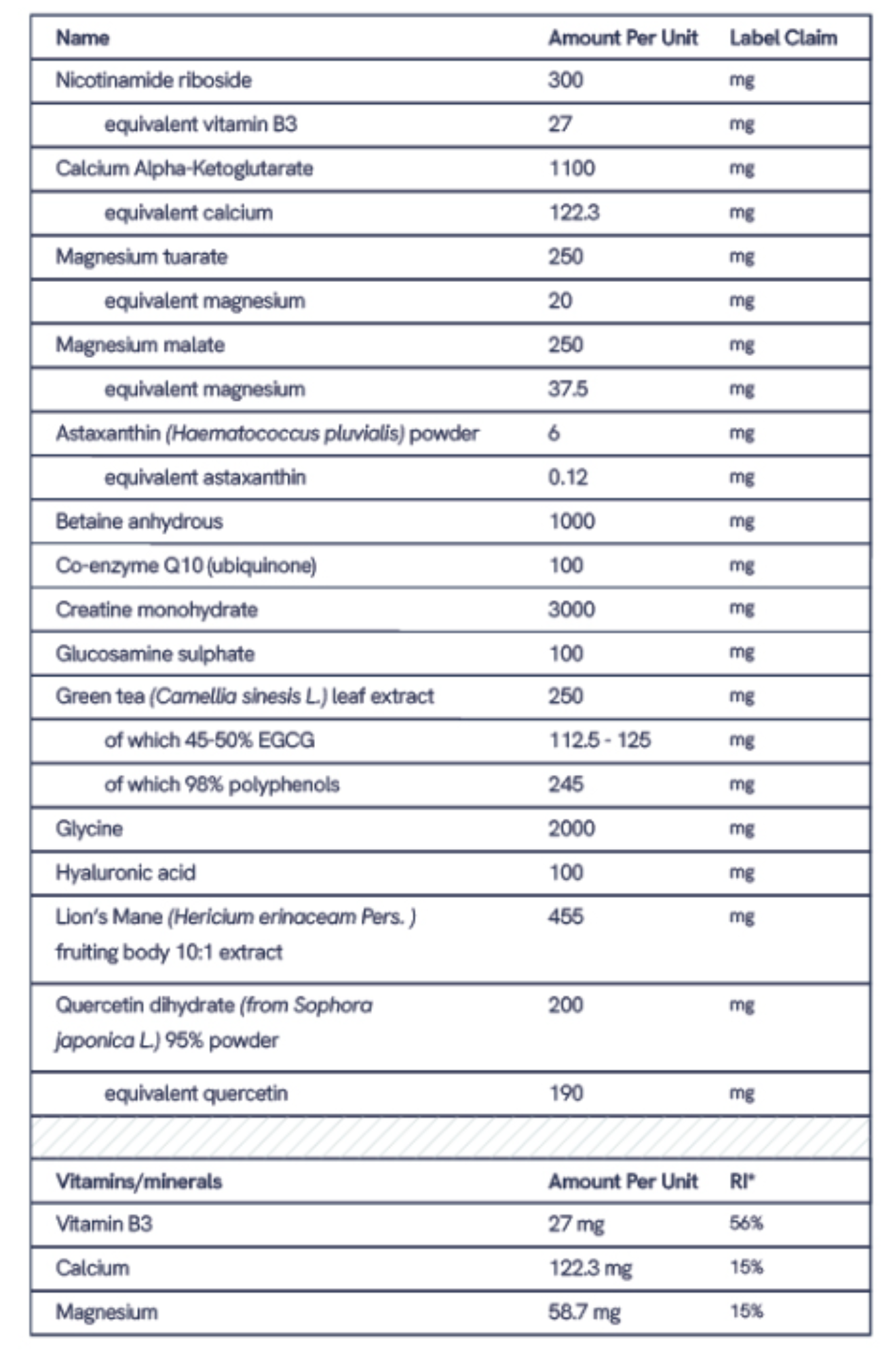
Formulations designed for comprehensive nutritional support — such as Longevity Complete, which contains Magnesium, Calcium, Vitamin D, Vitamin C, and further micronutrients — may be considered as part of a broader dietary strategy, where contextually relevant.
Q&A: Joint and Muscle Longevity
How does muscle strength relate to lifespan?
Large meta-analyses of prospective cohort studies have consistently found that higher levels of muscular strength are associated with a significantly lower risk of all-cause mortality.1 The mechanism is not fully established, but muscle strength likely reflects broader physiological reserves, including metabolic health, cardiovascular capacity, and systemic resilience. Grip strength, knee extension strength, and performance in functional mobility tests have all shown predictive value in independent research cohorts.
How much resistance training is needed for musculoskeletal longevity?
A systematic review and meta-analysis of prospective cohort studies found that muscle-strengthening activities of approximately 30 to 60 minutes per week were associated with 10 to 17% lower risks of all-cause mortality, cardiovascular disease, and type 2 diabetes.2 The relationship follows a J-shaped dose-response curve, meaning benefits are achieved at relatively modest volumes. Most evidence-based guidelines recommend resistance training at least two days per week, covering major muscle groups.
What is sarcopenia and when does muscle loss typically begin?
Sarcopenia is the progressive, age-related loss of skeletal muscle mass and function. Muscle mass begins to decline measurably from approximately the fourth decade of life, with estimates of 3 to 8% loss per decade, accelerating after age 60. Sarcopenia affects a meaningful proportion of older adults globally and is associated with functional decline, fall risk, and increased mortality. Both resistance training and adequate protein intake are the most evidence-supported strategies for slowing sarcopenic progression.
Is running bad for your joints in the long term?
Population-level data do not support the notion that recreational running uniformly accelerates knee joint degeneration. Large cohort studies have found that recreational runners do not have higher rates of knee osteoarthritis than sedentary individuals. The key variables are load management, training volume progression, footwear appropriateness, and individual biomechanics. Higher-impact activities carry greater overuse injury risk than low-impact alternatives, but appropriate programming mitigates this. If existing joint sensitivity is present, low-impact alternatives such as cycling, swimming, or rowing provide similar aerobic and muscular benefits with reduced joint loading.
What is the sitting-rising test and what does it measure?
The sitting-rising test (SRT) requires an individual to lower to the floor and stand back up without support. It is scored from 0 to 10, with one point deducted for each hand, knee, or arm support used. A prospective cohort study in 2,002 adults aged 51 to 80 years found that lower SRT scores were significantly associated with higher all-cause mortality over a median follow-up of over six years.3 The test simultaneously captures muscular strength, flexibility, balance, and motor coordination — a composite reflection of musculoskeletal fitness.
How much protein do older adults need to maintain muscle mass?
Evidence-based guidance from ESPEN recommends that healthy older adults consume at least 1.0 to 1.2 g of protein per kilogram of body weight daily, and up to 1.5 g/kg/day for those with acute illness or engaged in structured exercise.4 The standard RDA of 0.8 g/kg/day is considered a minimum to prevent deficiency but may be insufficient to counteract the anabolic resistance that develops with advancing age. Distributing intake across meals, with an emphasis on leucine-rich sources, is also recommended.
Can collagen supplements support joint health?
Human RCT data on collagen peptide supplementation and joint outcomes are growing. A 2024 systematic review of 11 RCTs (870 participants) found significant improvements in both joint function and pain scores associated with oral collagen supplementation compared with placebo.6 However, inter-study heterogeneity was high, and results varied by population and study design. Most evidence comes from adults with existing joint complaints rather than healthy populations, and the evidence base should be interpreted accordingly.
What EFSA-approved claims are relevant to musculoskeletal supplements?
Several EFSA-approved claims relate directly to musculoskeletal health. Magnesium contributes to normal muscle function and normal protein synthesis. Calcium and Vitamin D contribute to normal muscle function and maintenance of normal bones. Vitamin C contributes to normal collagen formation for bones and cartilage. Zinc contributes to normal protein synthesis and maintenance of normal bones. These claims reflect regulatory approval of the nutrient-function relationship at established intake levels and do not constitute therapeutic claims.
Frequently Asked Questions
What is the best longevity stack for muscle health?
An evidence-based approach to muscle health longevity combines resistance training (two or more sessions per week) with adequate dietary protein (1.0 to 1.6 g/kg/day for older adults), and nutritional support from micronutrients with EFSA-approved roles in muscle function. Magnesium contributes to normal muscle function and protein synthesis. Vitamin D contributes to normal muscle function. Creatine increases physical performance in successive bouts of short-term, high-intensity exercise and enhances muscle strength in adults over 55 with regular resistance training (EFSA-approved claims). No supplement replaces consistent training and adequate whole food intake.2
What is the best longevity stack for joint support?
For joint longevity, the most evidence-supported strategies are appropriate mechanical loading through exercise, maintaining a healthy body composition to reduce joint load, and ensuring adequate intake of collagen-supporting nutrients. Vitamin C contributes to normal collagen formation for bones and cartilage (EFSA-approved claim). Collagen peptide supplementation has been studied in multiple RCTs in adults with joint complaints, with a 2024 systematic review reporting significant improvements in function and comfort scores compared with placebo.6 Calcium, Magnesium, Vitamin D, and Zinc all contribute to the maintenance of normal bones.
What is the best longevity support for muscle and joints combined?
A combined approach to muscle and joint longevity prioritises resistance training (which simultaneously builds muscle strength and supports joint-stabilising musculature), adequate protein intake, and a micronutrient foundation that includes Magnesium, Calcium, Vitamin D, and Vitamin C. Collagen peptide supplementation may be considered as an adjunct for those with joint-related concerns, ideally taken with Vitamin C to support endogenous collagen synthesis. Multi-ingredient formulations like Longevity Complete, which contains these key nutrients with EFSA-approved functions, may complement a well-structured lifestyle programme.
What are the best longevity science supplements for joint health?
The supplement ingredients with the strongest human evidence and regulatory approval for joint-related functions include Vitamin C (contributes to normal collagen formation for bones and cartilage, EFSA-approved), Calcium and Vitamin D (contribute to maintenance of normal bones, EFSA-approved), Magnesium (contributes to normal bone maintenance, EFSA-approved), and Zinc (contributes to normal protein synthesis and bone maintenance, EFSA-approved). Collagen peptides have been studied in human RCTs for joint comfort outcomes.7 Avoid products making disease treatment claims, which are not permitted under EU regulations.
What are the best longevity science supplements for muscle health?
Supplements with EFSA-approved claims directly relevant to muscle health include Magnesium (contributes to normal muscle function and protein synthesis), Calcium (contributes to normal muscle function), Vitamin D (contributes to normal muscle function), and Creatine (increases physical performance in successive bouts of short-term, high-intensity exercise at 3 g/day; enhances muscle strength in adults over 55 with regular resistance training). Protein supplementation, while not a regulated health claim, has an extensive evidence base for supporting muscle protein synthesis when dietary protein targets are not met from whole food sources.4
References
- Garcia-Hermoso A, Cavero-Redondo I, Ramirez-Velez R, et al. Muscular Strength as a Predictor of All-Cause Mortality in an Apparently Healthy Population: A Systematic Review and Meta-Analysis of Data From Approximately 2 Million Men and Women. Arch Phys Med Rehabil. 2018;99(10):2100-2113.e5. View on PubMed ↗
- Momma H, Kawakami R, Honda T, Sawada SS. Muscle-strengthening activities are associated with lower risk and mortality in major non-communicable diseases: a systematic review and meta-analysis of cohort studies. Br J Sports Med. 2022;56(13):755-763. View on PubMed ↗
- Brito LBB, Ricardo DR, Araujo DSMS, Ramos PS, Myers J, Araujo CGS. Ability to sit and rise from the floor as a predictor of all-cause mortality. Eur J Prev Cardiol. 2014;21(7):892-898. View on PubMed ↗
- Deutz NE, Bauer JM, Barazzoni R, et al. Protein intake and exercise for optimal muscle function with aging: recommendations from the ESPEN Expert Group. Clin Nutr. 2014;33(6):929-936. View on PubMed ↗
- Bauer J, Morley JE, Schols AMWJ, et al. Protein Intake and Muscle Health in Old Age: From Biological Plausibility to Clinical Evidence. Nutrients. 2016;8(5):295. View on PubMed ↗
- Hsieh CF, Liu CW, Lee YC, Li CY. Effect of collagen supplementation on knee osteoarthritis: an updated systematic review and meta-analysis of randomised controlled trials. Int Orthop. 2024. doi:10.1007/s00264-024-06252-y. View on PubMed ↗
- Shaw G, Lee-Barthel A, Ross ML, Wang B, Baar K. Vitamin C-enriched gelatin supplementation before intermittent activity augments collagen synthesis. J Sci Med Sport. 2023. [Collagen peptides supplementation improves function, pain, and physical and mental outcomes in active adults.] View on PubMed ↗
- Zdzieblik D, Oesser S, Gollhofer A, König D. The Influence of Specific Bioactive Collagen Peptides on Knee Joint Discomfort in Young Physically Active Adults: A Randomized Controlled Trial. Nutrients. 2021;13(2):523. View on PubMed ↗
- de Souza e Silva CG, Araujo CGS, Chambergo M, et al. Muscle Power Versus Strength as a Predictor of Mortality in Middle-Aged and Older Men and Women. Mayo Clin Proc. 2025. doi:10.1016/j.mayocp.2025.01.020. View on PubMed ↗