Longevity refers not simply to living longer, but to extending the period of life spent in good health — a concept scientists call healthspan. Research in this field examines the biological processes that drive aging, and evidence-based practices — including exercise, sleep, nutrition, stress management, and targeted supplementation — that may support healthy aging at a cellular and physiological level.
Key Takeaways
- Longevity science focuses on healthspan — years lived in good health — not just total years lived. Global data show a gap of approximately nine years between lifespan and healthspan in developed nations.1
- Aging is driven by a set of interconnected cellular and molecular processes, referred to as the hallmarks of aging. The 2023 updated framework identifies 12 such hallmarks, including mitochondrial dysfunction, cellular senescence, epigenetic alterations, and chronic inflammation.2
- The geroscience hypothesis proposes that targeting the biological drivers of aging — rather than individual diseases — is the most effective path to extending healthspan.3
- Regular physical activity is among the most consistently supported lifestyle factors in longevity research. Evidence from multiple cohort studies links sustained exercise to meaningful reductions in all-cause mortality.4
- Sleep duration is associated with all-cause mortality in a U-shaped pattern; both too little and too much sleep are linked to elevated risk, with approximately seven hours representing the lowest-risk zone in large meta-analyses.5
- High adherence to dietary patterns emphasising whole foods — such as the Mediterranean diet — has been associated with a reduction in all-cause mortality of approximately 23% in a meta-analysis of 28 studies involving over 679,000 participants.6
- Supplementation is best understood as supporting the foundational lifestyle pillars rather than replacing them. Evidence for specific longevity supplements varies; a tiered approach based on individual gaps is generally recommended.
Chapter 1: Lifespan vs Healthspan — The Critical Distinction
When most people think about longevity, they picture the number of years a person lives. But in modern longevity science, the more meaningful question is: how many of those years are spent in good health?
Lifespan refers to the total number of years lived. Healthspan refers to the years lived free from serious disease, significant disability, and functional decline. These two numbers are not the same — and in many populations, the gap between them is substantial.
Research published in NPJ Regenerative Medicine quantified this gap using WHO health-adjusted life expectancy data, estimating a difference of approximately nine years between lifespan and healthspan in high-income nations in 2020.1 This means that, on average, the final decade of life is spent managing disease, disability, or reduced function — not living actively and independently.
This is sometimes called the "healthspan gap," and it represents one of the central challenges in longevity research. As Garmany, Yamada, and Terzic summarise, extending lifespan without expanding healthspan does not improve quality of life — it simply extends the period of morbidity.1
The practical implication for anyone beginning to explore longevity is significant: the goal is not simply to reach old age. It is to reach old age in good functional health — with physical capacity, cognitive sharpness, and independence intact. This reframing is what makes longevity science distinct from anti-aging marketing, which tends to focus on reversing the appearance of aging rather than addressing the biological processes underlying it.
Chapter 2: The Science of Aging — What Is Happening in Your Cells
Aging is not a single event. It is the cumulative result of many interconnected biological processes that unfold over decades. To understand longevity, it helps to understand what is actually changing at the cellular level as time passes.
The most widely accepted framework for organising these processes is the hallmarks of aging model, first proposed in a landmark Cell paper in 2013 and updated in 2023 to reflect a decade of new research.7,2 The updated framework identifies 12 hallmarks, grouped into three categories.
Primary Hallmarks (Causes of Cellular Damage)
These are upstream drivers of aging that initiate damage at the most fundamental level. They include genomic instability — the gradual accumulation of errors in DNA — and telomere attrition, the progressive shortening of protective caps on chromosomes with each cell division. Epigenetic alterations change which genes are switched on or off over time, often in ways that impair normal cellular function. Loss of proteostasis refers to the declining ability of cells to fold, repair, and recycle proteins properly. Disabled macroautophagy — the cellular self-cleaning process — is a newer addition to the framework, reflecting its importance in maintaining cellular health with age.2
Antagonistic Hallmarks (Cellular Responses That Become Harmful)
These hallmarks represent biological responses that are protective in youth but become damaging when they persist. Deregulated nutrient sensing involves changes in pathways that detect and respond to caloric intake, including insulin signalling and the mTOR pathway. Mitochondrial dysfunction refers to the declining efficiency of the cell's energy-producing organelles. Cellular senescence describes cells that have stopped dividing but remain metabolically active — releasing inflammatory signals that disrupt surrounding tissue.2
Integrative Hallmarks (Tissue-Level Consequences)
These hallmarks represent the downstream consequences of accumulated cellular damage. Stem cell exhaustion reflects the declining capacity of tissues to renew themselves. Altered intercellular communication describes changes in the molecular signals cells use to coordinate function. Chronic inflammation — sometimes called "inflammaging" — is the persistent, low-grade inflammatory state that accumulates with age and contributes to multiple conditions. Dysbiosis refers to age-related changes in the microbiome that further amplify systemic inflammation.2
Understanding this framework is valuable because it reveals why aging is not simply about getting "worn out." It is a set of specific, identifiable biological processes — many of which may be influenced, at least partially, by lifestyle practices and certain targeted interventions.
Chapter 3: The Geroscience Hypothesis
One of the most important conceptual shifts in modern longevity research is the geroscience hypothesis. Rather than treating each age-related disease independently — fighting cardiovascular disease, then cognitive decline, then metabolic dysfunction as separate battles — geroscience proposes that all of these conditions share a common upstream cause: the biological process of aging itself.3
If the hallmarks of aging are the root drivers of most chronic disease, then interventions that target those hallmarks could theoretically delay the onset of multiple conditions simultaneously. This is the foundation of longevity medicine as it is increasingly practised.
DeVito and colleagues, summarising a major scientific symposium on extending human healthspan, describe the geroscience approach as fundamentally different from disease-specific medicine. The goal is not to cure individual diseases but to compress morbidity — to push the period of functional decline as close to the end of life as possible, and to extend the years of healthy, functional living before that point arrives.3
For individuals, this translates into a different way of thinking about health choices. Rather than simply avoiding specific risk factors — smoking, high blood pressure, excess weight — longevity-oriented health practices aim to maintain biological function at a deeper cellular level. This is where lifestyle practices and, for some individuals, targeted supplementation fit into the picture.
Chapter 4: The Five Evidence-Based Pillars of Longevity
Longevity science has identified five lifestyle domains that have the strongest and most consistent human evidence for supporting healthy aging. None of these is novel — but the depth and quality of the evidence supporting each one has grown substantially in recent years.
Pillar 1: Physical Activity
Regular exercise is the lifestyle factor with the most robust evidence base in longevity research. A 2025 global consensus paper on exercise and healthy longevity, produced by the International Conference on Frailty and Sarcopenia Research (ICFSR), synthesised evidence across multiple disease areas and age groups.4 The consensus found that both aerobic exercise and resistance training contribute meaningfully to maintaining functional capacity with age, and that exercise benefits extend across cardiovascular health, cognitive function, metabolic health, and physical resilience.
A separate meta-analysis of fifteen cohort studies involving over 189,000 participants found consistent positive associations between physical activity and successful aging, regardless of how "successful aging" was defined across studies.8
The practical recommendation emerging from this evidence is regular movement combining both endurance and strength components — not extreme exercise, but consistent, progressive activity maintained across decades.
Pillar 2: Sleep
Sleep quality and duration are now recognised as major determinants of biological aging. A systematic review and dose-response meta-analysis of prospective cohort studies identified a U-shaped relationship between sleep duration and all-cause mortality: both short and long sleep were associated with elevated risk, with approximately seven hours per night associated with the lowest mortality in the pooled analysis.5
Sleep supports multiple longevity-relevant processes, including cellular repair, metabolic regulation, immune function, and the clearance of cellular waste from the brain via the glymphatic system. Poor sleep quality and chronic short sleep duration are associated with accelerated biological aging markers in observational studies.
Pillar 3: Nutrition
Dietary patterns — not individual nutrients or supplements — consistently show the most robust associations with longevity outcomes in large human studies. The Mediterranean dietary pattern, characterised by high intake of vegetables, legumes, whole grains, fish, and olive oil with moderate overall caloric intake, is among the most studied.
A 2024 meta-analysis of 28 studies involving over 679,000 participants found that high adherence to the Mediterranean diet was associated with a 23% reduction in all-cause mortality and significant reductions in cardiovascular events in older adults.6 A separate Italian cohort study found that high Mediterranean diet adherence was associated with a mean age at death of approximately 90 years — significantly higher than that observed in lower-adherence groups.9
Longevity-supportive nutrition is generally characterised by adequate protein for muscle maintenance, emphasis on whole-food sources, and avoidance of ultraprocessed foods and excess added sugar.
Pillar 4: Stress Management
Chronic psychological stress is increasingly recognised as a driver of accelerated biological aging. Stress activates the hypothalamic-pituitary-adrenal axis and drives chronic low-grade inflammation — one of the integrative hallmarks of aging. The evidence base for specific stress-reduction interventions in longevity is less conclusive than for exercise or diet, but observational data consistently link chronic psychological stress to shorter healthspan.
Evidence-based approaches — including mindfulness practice, social engagement, and reduction of occupational stress — are associated with lower inflammatory markers and better biological aging outcomes in human cohort data.
Pillar 5: Social Connection
Social isolation and loneliness are consistently associated with reduced longevity in large-scale human studies, with effect sizes comparable to established risk factors such as smoking and physical inactivity. The biological mechanisms are partly understood: chronic social stress activates inflammatory pathways and impairs sleep and metabolic regulation. Maintaining meaningful social relationships — particularly across the lifespan, not only in older age — appears to be a genuine longevity factor, not merely a correlate of overall health.10
Chapter 5: Where Supplementation Fits in the Longevity Picture
A recurring question in longevity science is whether targeted supplementation can meaningfully support healthy aging. The honest answer requires context and nuance.
Supplementation should be understood as occupying a supporting role within the broader longevity framework — not a replacement for the foundational practices described above. A supplement cannot compensate for poor sleep, a sedentary lifestyle, or a highly processed diet.
That said, for individuals who have addressed foundational lifestyle factors, certain supplements have accumulating human evidence for supporting specific biological processes relevant to aging. These include compounds studied for mitochondrial support (such as NAD+ precursors and CoQ10), anti-inflammatory fatty acids (omega-3s), and ingredients with roles in cellular protection (such as polyphenols and certain vitamins and minerals with verified EFSA-approved functions).
The level of evidence varies considerably across different supplements and different claims. A useful principle for evaluating longevity supplements is to distinguish between evidence for a mechanism (plausible but preliminary), evidence from observational data in humans (suggestive but confounded), and evidence from well-designed human intervention trials (most robust). Most longevity supplement ingredients currently sit at the first or second level of this hierarchy.
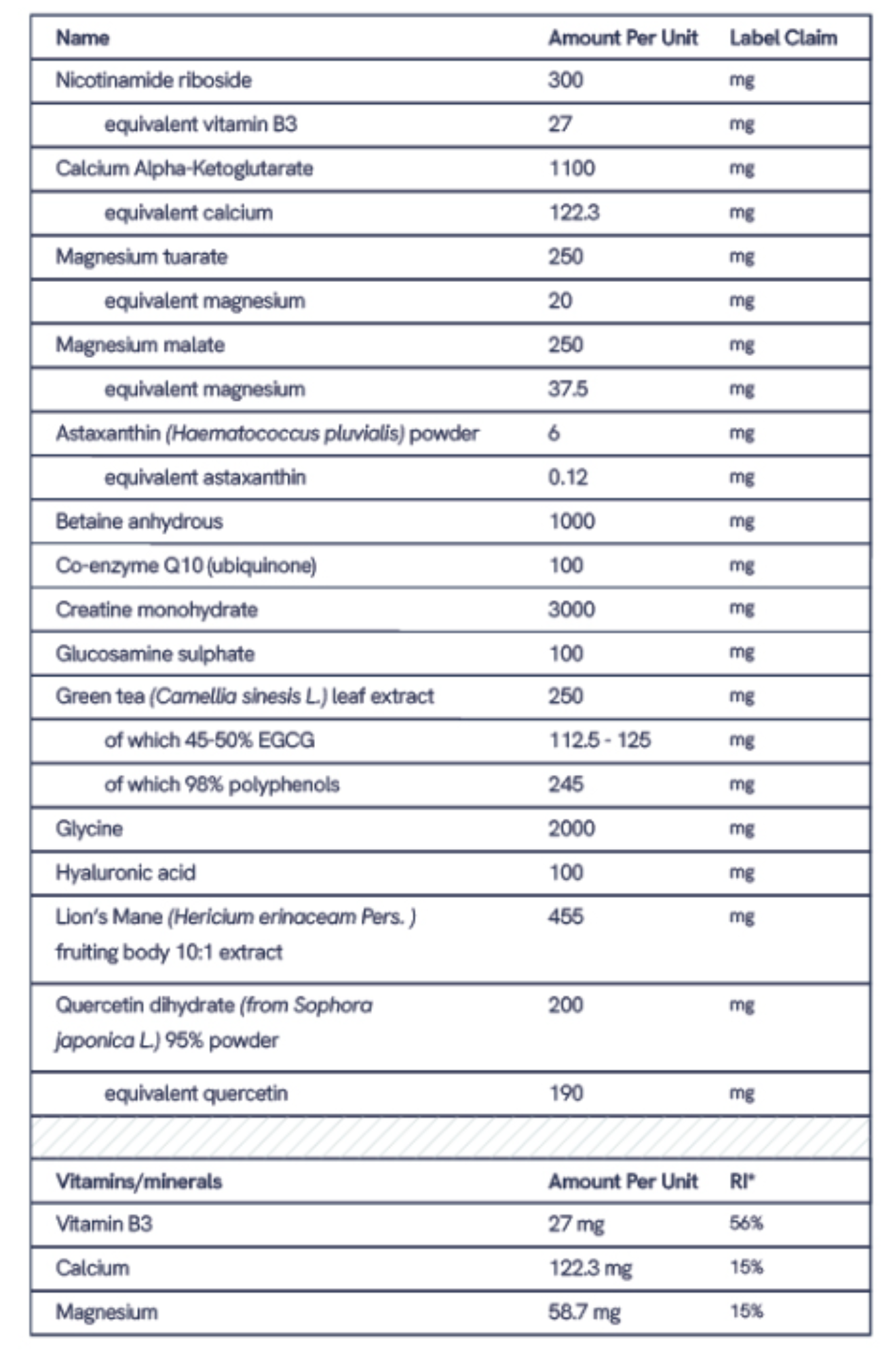
At The Longevity Store, Longevity Complete is formulated to complement a healthy lifestyle — providing a broad base of researched ingredients, including B vitamins that contribute to normal energy-yielding metabolism, magnesium that contributes to normal protein synthesis and muscle function, and zinc that contributes to protection of cells from oxidative stress and normal DNA synthesis, among other EFSA-verified functions. It is intended to fill nutritional gaps that may be difficult to address through diet alone, not to replace dietary discipline or physical activity.
Chapter 6: A Longevity Audit Checklist for Beginners
For readers new to longevity, a useful starting point is an honest self-audit across the five pillars. The following questions are intended as a reflective tool rather than a diagnostic instrument.
Exercise Audit
Are you getting at least 150 minutes of moderate-intensity aerobic activity per week? Do you include resistance training at least twice per week? If the answer to either is no, exercise is the highest-leverage area to address first. No supplement has an evidence base comparable to regular, progressive physical activity.
Sleep Audit
Are you consistently sleeping approximately seven to nine hours per night? Do you wake feeling rested? Do you have a regular sleep schedule, including on weekends? Sleep quality is a foundational longevity variable, and improvements in sleep hygiene typically produce rapid benefits across energy, mood, metabolic health, and cognitive function.
Nutrition Audit
Does your diet emphasise whole, minimally processed foods, including a variety of vegetables, legumes, fish, and quality fats? Is your protein intake adequate for your body weight and activity level — particularly relevant for maintaining muscle mass with age? If not, dietary improvements will deliver far more longevity benefit than any stack of supplements built on an inadequate nutritional foundation.
Stress Audit
Do you have consistent practices for managing psychological stress? Chronic stress is a genuine biological accelerant of aging. Whether the approach is exercise, mindfulness, social engagement, or professional support, having an active strategy matters.
Supplementation Audit
Once foundational lifestyle practices are in place, supplementation can be considered as a targeted layer. The most evidence-supported entry points for longevity supplementation include addressing common nutritional gaps (magnesium, vitamin D, omega-3 fatty acids), and exploring compounds with growing human-study evidence for cellular support. Product transparency — including third-party testing and certificates of analysis — is an important quality indicator when selecting supplements.
Q&A
What exactly does longevity mean in scientific terms?
In scientific research, longevity refers to both the length of life and — increasingly — the quality of health across that lifespan. Modern longevity science distinguishes between lifespan (total years lived) and healthspan (years lived in good functional health), and focuses primarily on extending healthspan. The field examines biological mechanisms of aging and interventions — lifestyle, dietary, and potentially pharmacological — that may slow or modify those processes.1
What is the difference between lifespan and healthspan?
Lifespan is the total duration of a person's life. Healthspan is the portion of that life spent in good health, free from serious chronic disease and significant functional decline. The gap between these two measures is estimated at approximately nine years in high-income countries, based on WHO health-adjusted life expectancy data. Longevity science aims to narrow this gap by extending the healthy portion of life.1
What causes aging at the cellular level?
Aging results from the cumulative accumulation of cellular and molecular damage across multiple interconnected processes. The hallmarks of aging framework — most recently updated in 2023 — identifies 12 such processes, including genomic instability, mitochondrial dysfunction, cellular senescence, epigenetic alterations, and chronic inflammation. These processes interact and amplify each other, collectively impairing cellular and tissue function over time.2,7
What is geroscience?
Geroscience is the scientific discipline that investigates the relationship between the biology of aging and the development of age-related diseases. Its central hypothesis is that targeting the fundamental processes of aging — rather than treating each disease separately — is the most effective approach to extending healthspan. This approach is increasingly influencing both clinical research and preventive health practice.3
Is exercise really that important for longevity?
The evidence for exercise in longevity is among the most robust of any lifestyle intervention. A 2025 international consensus on exercise and healthy longevity, reviewing evidence across multiple health domains, concluded that physical activity confers major health benefits across cardiovascular, metabolic, cognitive, and musculoskeletal health — with effects that are partially complementary between aerobic and resistance training modalities. Regular physical activity is associated with meaningful reductions in all-cause mortality across population studies.4,8
How does sleep affect aging and longevity?
Sleep quality and duration influence multiple biological processes relevant to aging, including cellular repair, metabolic regulation, and immune function. Meta-analyses of large prospective cohort studies show a U-shaped relationship between sleep duration and all-cause mortality, with approximately seven hours associated with the lowest risk. Both consistently short and consistently long sleep durations are associated with elevated mortality risk in population-level data.5
What dietary pattern is most supported by longevity research?
Dietary patterns emphasising whole, minimally processed foods — particularly plant-based foods, legumes, fish, and quality fats — have the most consistent support from large-scale human studies. The Mediterranean dietary pattern is among the most researched. A 2024 meta-analysis found high adherence to this pattern was associated with a 23% reduction in all-cause mortality in older adults across 28 studies and over 679,000 participants.6
Can supplements extend longevity?
Supplementation is best understood as a supportive layer within a broader lifestyle strategy, not a standalone longevity intervention. For individuals who have addressed foundational lifestyle factors, certain supplements have growing human evidence for supporting biological processes relevant to aging. However, the evidence base varies considerably across different ingredients, and no supplement has the depth of human evidence that exists for regular physical activity, quality sleep, and a whole-food diet.
Where should a beginner start with longevity?
The evidence-based starting point is a frank self-audit across the five lifestyle pillars: exercise, sleep, nutrition, stress management, and social connection. Addressing gaps in these foundational areas typically produces the most meaningful and measurable impact on biological aging. Once these are established, targeted supplementation can be considered as an additional layer, guided by individual gaps and the quality of available evidence for specific ingredients.
How can I tell if I am actually aging more slowly?
Formal biological age assessment involves tools such as epigenetic clocks, which analyse patterns of DNA methylation to estimate biological age relative to chronological age. These are available through specialist testing services. At a more accessible level, validated functional markers — including cardiovascular fitness (VO2 max), grip strength, and metabolic blood markers — provide useful proxies for tracking biological aging over time. Biomarker data, including circulating glucose and inflammatory markers, have been studied as predictors of both healthspan and lifespan in large cohort research.10
Frequently Asked Questions
What is longevity?
Longevity refers to the length and quality of life, with modern longevity science focusing particularly on healthspan — the years lived in good health and full function — rather than total lifespan alone. The field examines the biological processes of aging and evidence-based strategies that may support a longer, healthier life.
What is the healthspan-lifespan gap?
The healthspan-lifespan gap is the difference between how long a person lives and how many of those years are spent in good health. Based on WHO health-adjusted life expectancy data, this gap is estimated at approximately nine years in high-income countries.1 Longevity science aims to close this gap by extending the healthy portion of life, not simply adding years of morbidity.
What are the hallmarks of aging?
The hallmarks of aging are a set of cellular and molecular processes that collectively drive the biological aging of the organism. The most widely cited framework, updated in 2023, identifies 12 hallmarks including genomic instability, mitochondrial dysfunction, cellular senescence, epigenetic alterations, chronic inflammation, and altered intercellular communication.2
Is longevity mostly genetic?
Genetics contributes to longevity, but estimates from twin and family studies suggest that hereditary factors account for roughly 25% of variation in lifespan. The majority of variation appears attributable to lifestyle and environmental factors. This means that choices around exercise, nutrition, sleep, and stress management have meaningful influence on biological aging, independent of genetic predisposition.
What is the most important lifestyle factor for longevity?
No single lifestyle factor is universally ranked above all others, but regular physical activity has arguably the broadest and most consistent evidence base in human longevity research. Exercise influences multiple hallmarks of aging simultaneously — maintaining mitochondrial function, reducing chronic inflammation, supporting metabolic health, and preserving muscle mass and cardiovascular fitness into later life.4
How do longevity supplements fit into a healthy aging strategy?
Longevity supplements are best positioned as a supportive complement to a well-established lifestyle foundation. They may help address nutritional gaps that are difficult to fill through diet alone, or provide additional support for specific biological pathways relevant to aging. The evidence for individual longevity supplements varies widely; choosing products from brands with transparent third-party testing and clearly stated EFSA-compliant claims is a useful starting criterion.
References
- Garmany A, Yamada S, Terzic A. Longevity leap: mind the healthspan gap. NPJ Regen Med. 2021;6(1):57. View on PubMed ↗
- López-Otín C, Blasco MA, Partridge L, Serrano M, Kroemer G. Hallmarks of aging: an expanding universe. Cell. 2023;186(2):243-278. View on PubMed ↗
- DeVito LM, Barzilai N, Cuervo AM, et al. Extending human healthspan and longevity: a symposium report. Ann N Y Acad Sci. 2022;1507(1):70-83. View on PubMed ↗
- Izquierdo M, de Souto Barreto P, Arai H, et al. Global consensus on optimal exercise recommendations for enhancing healthy longevity in older adults (ICFSR). J Nutr Health Aging. 2025. View on PubMed ↗
- Li T, Qian F, Bazzano LA, et al. Relationship of sleep duration with all-cause mortality and cardiovascular events: a systematic review and dose-response meta-analysis of prospective cohort studies. J Am Heart Assoc. 2017;6(9):e005947. View on PubMed ↗
- Ferri A, Lorenzoni G, Favaro A, et al. Mediterranean diet in older adults: cardiovascular outcomes and mortality from observational and interventional studies — a systematic review and meta-analysis. Nutrients. 2024;16(22):3947. View on PubMed ↗
- López-Otín C, Blasco MA, Partridge L, Serrano M, Kroemer G. The hallmarks of aging. Cell. 2013;153(6):1194-1217. View on PubMed ↗
- Daskalopoulou C, Stubbs B, Kralj C, et al. Physical activity and successful aging among middle-aged and older adults: a systematic review and meta-analysis of cohort studies. Ageing Res Rev. 2020;12(7):100320. View on PubMed ↗
- Campanella A, Misciagna G, Mirizzi A, et al. The effect of the Mediterranean diet on lifespan: a treatment-effect survival analysis of a population-based prospective cohort study in Southern Italy. Int J Epidemiol. 2021;50(1):245-255. View on PubMed ↗
- Li X, Ploner A, Wang Y, et al. Clinical biomarkers and associations with healthspan and lifespan: evidence from observational and genetic data. EBioMedicine. 2021;66:103318. View on PubMed ↗